
Between the Stage and the Streets: A Journey of Resistance Beyond the Spotlight of Power
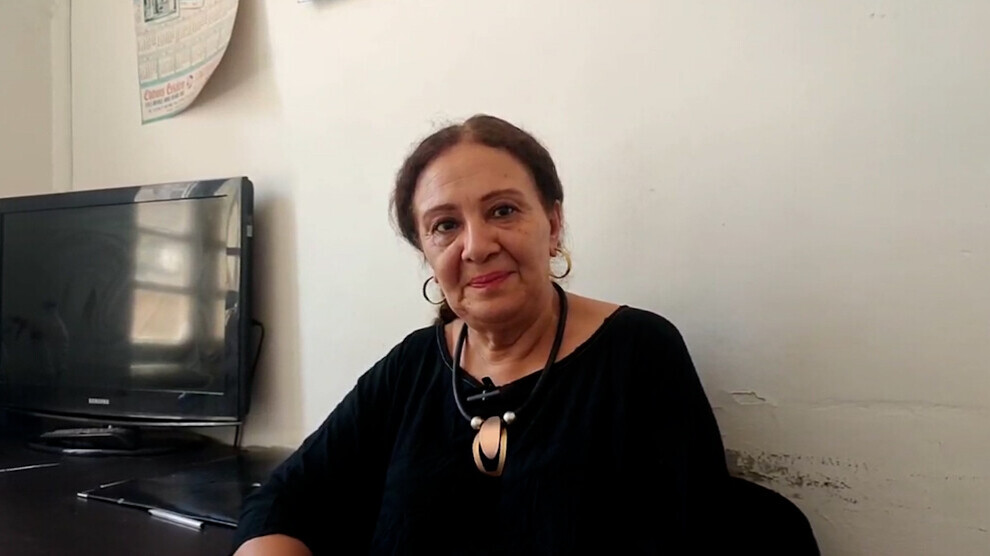
Tunisian actress Leila Chabbi views art as a powerful form of resistance, criticizing the silence of some artists on freedom and national issues while urging the artistic community to fulfill its social responsibility and speak out.
ZOHOUR AL-MASHRİQİ
Tunis – The roots of artistic resistance in Tunisia run deep in the country's history. Artistic expression has never been detached from the broader struggle for national and social liberation. Since the early twentieth century, Tunisian artists realized that the stage, the written word, and music were powerful tools beyond the control of political authority. Early playwrights transformed the theater into a platform for resisting colonial domination and shaping a shared national identity. Following independence, this role evolved into a form of "committed art" that exercised political and social criticism with intelligence and subtlety.
For decades, Tunisian artists developed a symbolic language based on metaphor, allegory, and historical references to convey messages of freedom and social justice while evading censorship. They transformed the daily hardships of ordinary citizens into human dramas that rejected defeat and insisted on remaining at the heart of public life.
Within this context, art transcends its entertainment function to become a daily arena of engagement with reality. Resistance is expressed not only through artistic content but also through the ethical stance artists choose to take in the public sphere.
Tunisia's cultural history is rich with figures who believed that an artist's silence amounts to defeat—for both the artist and society itself. Committed songs and political theater became the voices that documented the experiences of the marginalized and the oppressed when official narratives failed to do so.
This form of art, refusing to become domesticated or subservient to authority, has consistently made Tunisian artists targets of repression. The restrictions imposed upon creative figures stand as evidence of the vitality of their role and affirm that free expression and principled positions continue to threaten those who seek to monopolize truth or impose a single narrative.
This tradition of resistance is embodied today in the career of actress Leila Chabbi, who has gone beyond her role as a respected performer to become what might be described as an "engaged public intellectual," bringing the concerns of ordinary citizens to the forefront. Through her public statements and activism, she represents the historical continuation of the resistant artist who refuses to exchange principles for privilege—a stance that has exposed her to systematic pressure, ranging from professional exclusion to online defamation campaigns.
Choosing Acting as a Mission, Not a Career
Leila Chabbi says that her decision to pursue acting many years ago was never driven by the pursuit of fame or financial gain. From the very beginning, she viewed theater as a vehicle for conveying meaningful messages and as a strategic means of building bridges with Tunisian society in all its diversity.
She recalls deliberately choosing this difficult path because she believed it offered a genuine opportunity to make a tangible impact, far removed from the superficial glamour associated with other professions available to her at the time.
She reflects on significant milestones in Tunisian theater, particularly her performance in Leila and the Wolf in 1997, which she describes as Tunisia's first female one-woman show. More than entertainment, the production represented a bold challenge to social taboos, successfully breaking many long-standing barriers. Chabbi acknowledges that the roles she selected did not appeal to everyone, but she considered them necessary to confront the intellectual stagnation surrounding the country's political and social realities at the time.
After 2011: The Search for Dignity
Turning to the period following 2011, Chabbi speaks with both sorrow and critical reflection. She believes that conditions have steadily deteriorated, moving toward what she describes as increasing decline and contempt. In her view, responsibility does not lie with one particular party but rather with a collective failure to meet the Tunisian people's fundamental demands: freedom, freedom of expression, employment, dignity, and national sovereignty. She argues that the dream of progress has instead collided with a period of regression that has made these aspirations increasingly difficult to achieve.
Chabbi draws a clear distinction between supporting ideas and showing loyalty to political parties. She explains that since the age of eighteen she has participated in political demonstrations independently, without partisan affiliation. She emphasizes that she has never belonged to any political movement or party, but has always acted according to her own convictions. She adds that when she publicly supports figures such as "Professor Abir Moussi," she does so because she agrees with their ideas rather than out of party loyalty, stressing once again that she has never been affiliated with any political organization.
She insists that she will remain steadfast in her principles, believing that artists should not merely perform roles but should serve as witnesses to their era and voices for those who cannot speak for themselves, even under the most difficult circumstances.
"Fear Is Not the Path to Liberating Nations"
Chabbi stresses that her activism is not rooted in narrow partisan interests but is instead a broad call for the protection of freedom and the rule of law, which she regards as the only enduring guarantee of state stability. She then turns to Tunisia's Independent High Authority for Elections, arguing that, in her opinion, it lacks legal legitimacy due to procedural shortcomings.
She contends that the authority was not legally constituted, was not the product of democratic internal elections, and violated previously established electoral legislation, rendering its decisions, in her view, devoid of legitimacy.
She also criticizes what she describes as the authorities' disregard for the Administrative Court's rulings and condemns practices within state institutions that, in her opinion, undermine the legitimacy of elections. She notes that she participated in a protest alongside lawyer Hussein Hami outside the electoral authority to express their rejection of these developments.
Chabbi states that, as a free Tunisian citizen, she refuses all forms of defamation or restrictions targeting her professional work. Such attempts, she says, will never deter her from defending citizens' rights to freely choose their representatives and express their opinions. She also condemns the shrinking space available to civil society and the restrictions imposed on cultural festivals that once enriched Tunisia's intellectual and cultural landscape.
She argues that the current situation has moved beyond dictatorship into what she describes as "theocracy," maintaining that such practices betray the achievements of the Tunisian people and contribute nothing to genuine national progress.
Reaffirming her commitment to her convictions, Chabbi declares that no security summons or legal prosecution will alter her belief in the necessity of restoring the democratic process. She warns against the continued marginalization of civil society, describing it as a vital safeguard against authoritarian excesses, and insists that human rights activism will continue despite mounting pressure.
She also expresses her embarrassment at belonging to Tunisia's cultural sector today, arguing that many within it have failed the Tunisian people through silence and submission. In her view, it is shameful for artists to remain silent while freedom is restricted and creative work is subjected to increasing censorship.
She concludes by affirming that she will never stop raising her voice, even if she finds herself standing alone. "It does not matter if we are starved or prevented from working," she says. "What matters is that we carry the cause of our homeland. I firmly believe that our country and our people deserve to live with dignity after a revolution that once inspired the Arab world and Africa."
In her closing message to fellow artists, Leila Chabbi urges them to reclaim their voices:
"It is essential that you recover the voices that have remained silenced. Fear is not the path to liberating nations. In the end, our struggle is peaceful. We call for dialogue and for our country to become free once again. Prison should never be used as a tool to punish, silence, intimidate, or terrorize people."