
From straw and ropes, a story is born… a woman revives the heritage of Sweida
Facing disappearance of crafts, Sahr turns handicrafts into generational bridge; forty years of experience become artistic artistic project reviving popular heritage with modern spirit, keeping it alive in homes and memory.
Roshel Junior
As-Sweida – At a time when manifestations of modernity are accelerating and many traditional crafts are disappearing in the face of ready-made industrial products,some hands still believe that heritage is not just a past to be recounted, but a living identity that deserves to be preserved and passed on to future generations.
Amid efforts to preserve flk memory and present it again in a way that suits the era, female modles emerge who have managed to turn handicrafts into a cultural and social message that carries the fragrance of the past and the spirit of the present together.
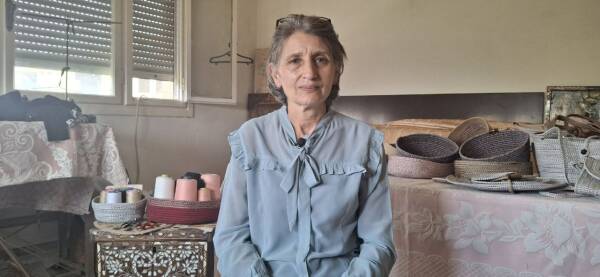
Among these models is Sahr Al‑Ashoush, who dedicated more than forty years of her life to fashion design and tailoring, then turned to traditional handicrafts, creating from simple materials artistic works that pulse with authenticity and reflect the features of the popular heritage of Sweida.
Inside her modest home, among fabric, straw, and old ropes, her long journey with handicrafts began, driven by her extensive experience in the world of fabrics and design, in addition to her deep love for her region's heritage and her belief that traditional crafts are an essential part of society's memory.
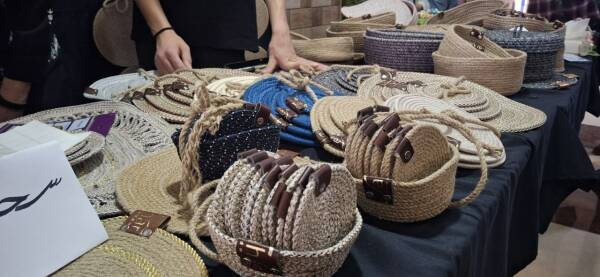
Sahr Al‑Ashoush believes that her long years of work in fashion design gave her extensive experience in coordinating colors, materials, and fine details, which later helped her develop heritage works carrying contemporary artistic touches.
She affirms that handicrafts are not just a means of earning a living or a hobby to pass the time; they are the story of ancestors and details of daily life that formed the spirit of old homes. Therefore, through her work, she seeks to revive those details in a modern way that makes heritage close to people and present in their daily lives, rather than remaining preserved only in memory.
She explained that the idea for her project came from her constant contemplation of the old houses for which Sweida is famous, especially the black stone houses, which still preserve their beauty and majesty despite the passage of time and the development of architecture. Sahr Al‑Ashoush compares her project to these houses; she tries to develop heritage without losing its original spirit, just as the old stone remained a fixed part within modern buildings.
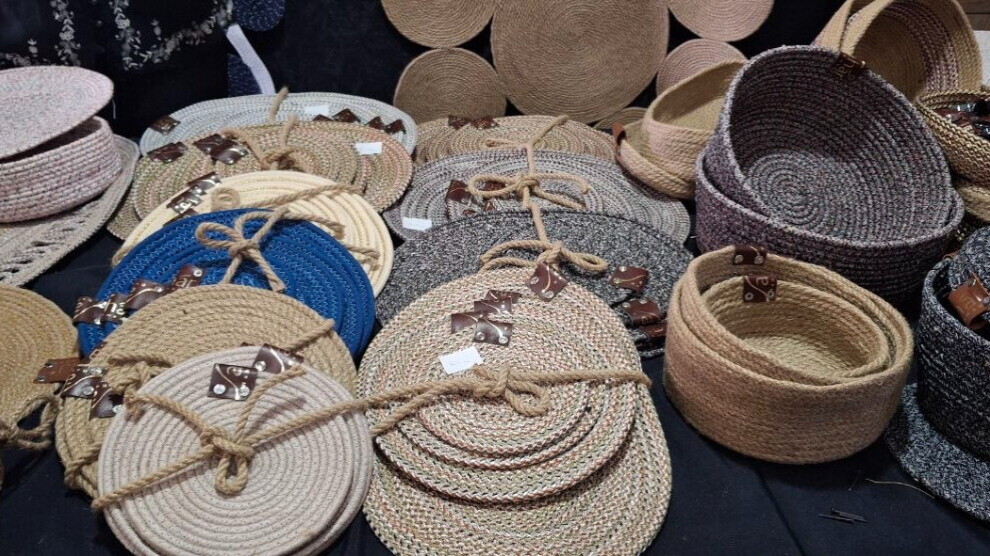
From this vision, she began designing household pieces inspired by popular heritage, using simple materials that grandmothers used to rely on in the past, such as straw plates, handmade trays, and traditional ropes that decorated homes and were used in daily life details. However, she re‑presented these materials in a modern style that makes them suitable for contemporary decor and current home use, so that heritage pieces become part of daily life, not just collectibles for display.
she points to the difficulties in securing raw materials, especially as many old materials have disappeared from markets with the development of modern industries, such as natural straw and certain types of ropes that were used in the past to make household tools and tie traditional chairs. Therefore, she has been forced to search in old workshops, upholstery shops, and popular markets to obtain materials that resemble those used in the past and preserve the spirit of heritage work.
Sahr Al‑Ashoush dreams in the future of establishing a small institution dedicated to teaching traditional handicrafts, bringing together women interested in reviving heritage through contemporary methods, with the aim of transferring expertise to the new generation and providing job opportunities that help women improve their living conditions, especially given the difficult economic circumstances.
She believes that traditional crafts can turn into important productive projects if they receive adequate support and proper marketing, because handmade products carry artistic and cultural value that differs from ready‑made industrial products, which is why many people today are returning to interest in heritage works and searching for pieces that carry the spirit of the past.
She also affirms that preserving heritage is a collective responsibility that falls on the entire society, because the disappearance of old crafts means the loss of an important part of people's history and memory. Therefore, through her work, she tries to bring old tools back to life in a new way, so that they remain present in the homes of children and grandchildren and continue as part of the community's cultural identity.