
The Homeland in the Poetry of Hanaa Mikou… An Experience Lived Before It Is Written.
Hanaa Mikou creates poetic worlds blending sensory and contemplative elements, where homeland is lived through details, expressing belonging through the intersection of memory, body, and language.
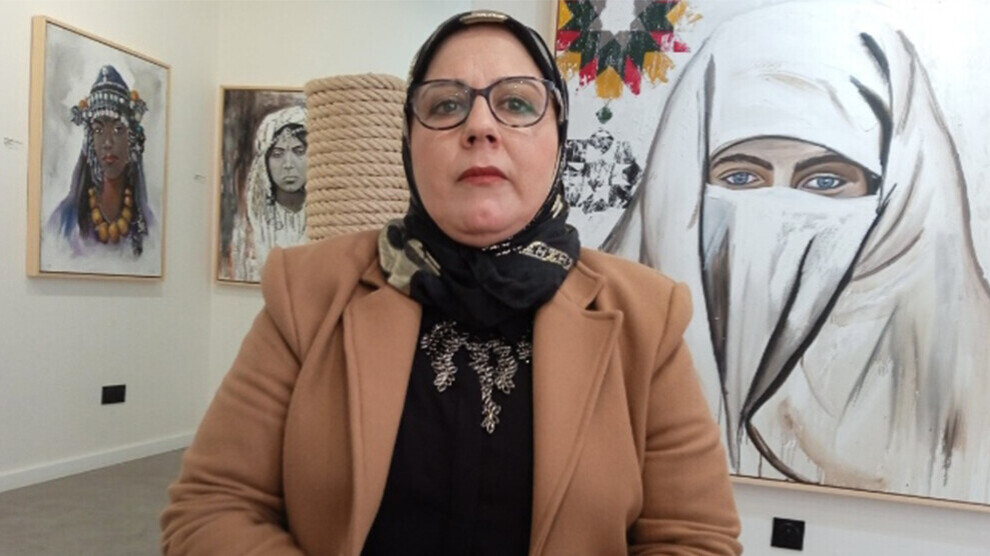
Hanan Hart
Morocco — Hanaa Mikou, the Moroccan poet, rejects reducing writing to ready-made labels such as “women’s writing” or “children’s writing,” affirming that true creativity stems from the human self in its essence. By the same logic, her poetic experience shows that a woman’s experience, despite its connection to daily details, does not separate from the broader human experience, where small moments transform into vivid and shared meanings.
In her latest collection, “I Accept Nothing but the Spices of My Homeland,” the poet presents belonging as a bridge between the self and the world, between memory and the body, and between the sensory and the contemplative.
In the following interview, Hanaa Mikou explains how language and poetic imagery become tools for reconstructing homeland and identity, and how the presence of women in writing reflects a shared human space.
In your latest collection, “I Accept Nothing but the Spices of My Homeland,” you present belonging as a sensory and aesthetic experience. How do you see the role of language in conveying this experience? And can we speak of a specificity in women’s writing within this context?
First of all, I do not like reducing writing to labels such as “women’s writing” or “children’s writing,” because true creativity stems from the human self in its essence.
In poetry, language is not merely a means of expression, but a living entity that carries feeling, thought, and beauty at once. It requires precision, rebellion, and sensitivity.
Through this language, belonging becomes a multi-layered experience, constructed through imagery, rhythm, and reflection. It does not merely express the idea of belonging, but makes the reader live it—through evoked scents, sounds, and colors, and through that subtle thread connecting memory, body, and place. Thus, language becomes a bridge between the inner and outer worlds, granting the experience its profound human dimension.
Does a woman’s experience of the homeland differ from the general human experience? And how is this difference, if it exists, reflected in your poetry?
A woman’s experience does not separate from the general human experience, but it is lived from a perspective more closely connected to daily details. For a woman, the homeland does not appear only as a symbol or an idea, but as a lived space: in the home, in relationships, and in the feeling of safety or its loss.
This connection to the sensory gives her perception of the homeland a vivid character, where it becomes something felt and lived, not merely an abstract concept.
In my writing, I try to balance this sensory dimension with intellectual reflection, so that belonging transforms from an individual feeling into a human experience open to others.
In speaking about writing, you introduce the concepts of “passage” and “fullness.” How are these dimensions formed within your poetic experience? And do you see a connection between them and the way women are present in the text?
Poetic writing is a deeply personal experience, and for me it expresses the music hidden within the soul. What I call “passage” is this constant movement between the inner and the outer, between the self and the demands of reality, creating a complex awareness reflected in the text.
As for “fullness,” it arises from the density of lived experience with all its transformations, where these experiences become expressive energy that gives the text its sincerity and depth.
The presence of women in poetry is not built through direct discourse, but manifests in their inner voice: in their way of seeing the world, their sensitivity to details, and their ability to transform personal experience into a shared human meaning.
Details from daily life are present in your poetry in representing the homeland. How do you choose these images and scenes? And what makes small details capable of carrying the meaning of belonging?
The choice of these images is linked to my relationship with place. The homeland does not appear in my writing only through its grand symbols, but through small details we live daily: the smell of bread, the sounds of the neighborhood, moments of waiting, and even fatigue.
These details, despite their simplicity, carry memory and meaning, and in poetry they become images charged with emotion. For me, the homeland is not an abstract idea, but an experience lived in the body and memory, and written from within daily life.
Moreover, women, due to the multiplicity of their roles, acquire a special sensitivity toward such details, which allows them to see the world as an interconnected whole, where the personal meets the collective, and the individual becomes an expression of a shared experience.
If you were to summarize the experience of belonging as you live it poetically, how would you condense it into a single image or idea?
I would summarize it in the interweaving of four words: love, beauty, homeland, and life. Love is the energy that gives everything its meaning; beauty is the ability to perceive it even in the simplest details; the homeland is the feeling of safety and belonging, not merely a place; and life is the framework that holds all these experiences with their contradictions.
When these elements come together, belonging becomes a living experience that is both lived and written, and poetry becomes an open space for the continuous search for meaning, and for expressing this deep connection between the self and the world.