
Women as Partners in Building the New Syria: Exclusion Will Not Build a Democratic
When nations rebuild, state-making goes beyond political deals among rival powers; it fundamentally reshapes societal identity and defines how every community fits into the newly emerging order.
NAGHAM JAJAN
Qamshlio—In Syria, as debates accelerate over the transition, constitutional design, and the structure of the state, women are asserting themselves as essential architects of the country’s future—firmly rejecting any compromise that re-creates political marginalization or disenfranchisement.
Syrian women argue that a truly democratic Syria cannot take root without their full participation in constitution-making and decision-making, alongside the embedding of citizenship, equality, and justice in state institutions. Activists and political figures emphasize that women are no longer asking for symbolic representation, but for genuine partnership in founding the new Syria.
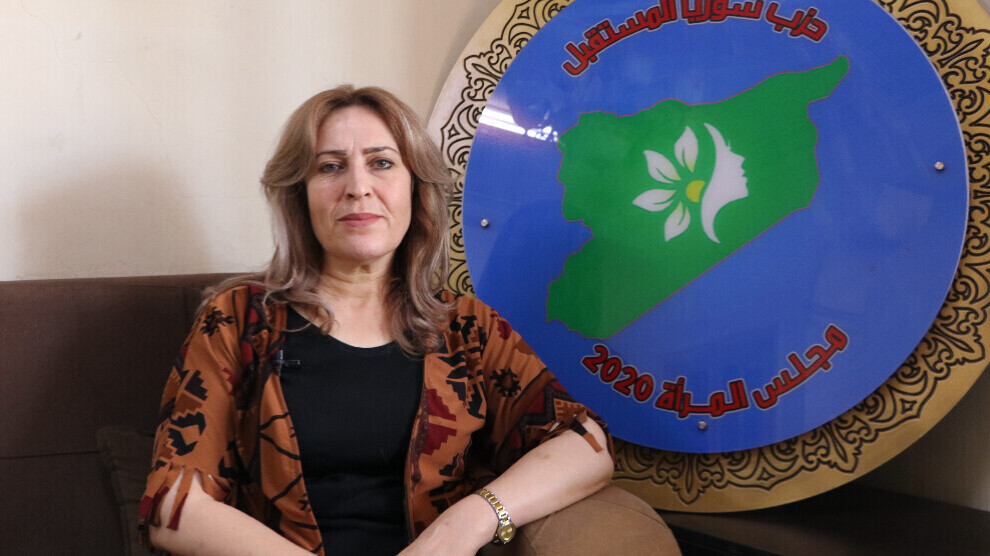
In an interview with our agency, Rima Mahmoud, a member of the Diplomatic Relations Bureau of the Future Syria Party, stated that Syrian women possess a clear vision for the nation’s future. She emphasized that the current phase serves as a definitive test of Syria's ability to transition into a democratic state that protects the rights of all citizens without discrimination.
Mahmoud pointed out that for over five decades, the Ba'ath regime entrenched policies of exclusion and authoritarianism, leaving women among the most marginalized groups, stripped of real political and social participation.
"Following the fall of the Ba'ath regime, Syrian women held high hopes that a new era would dawn—one that would end decades of oppression and suffering and allow them to live in freedom and security," Mahmoud said. "Under Ba'athist rule, women were denied their full rights, and their contributions were never genuinely recognized."
The Rojava Model: A Breakthrough in Women's Participation
Mahmoud highlighted the pivotal role played by women in the Rojava Revolution, noting that it did not merely shift power dynamics, but brought about a profound transformation in women's social standing.
"Women were at the forefront of the Rojava Revolution, leaving an indelible mark across all spheres," she stated. "Despite the war and adversity, the revolution offered historic opportunities for women to lead in the military, political, and social arenas, turning the experience of women in North and East Syria into a global benchmark."
She noted that the revolution united women across diverse ethnic and cultural backgrounds, significantly amplifying their public presence and inspiring women beyond the region to demand their rights and freedoms.
"Many women across different regions were inspired by the experience of North and East Syria and began organizing themselves to claim their rights. Thanks to their struggle and perseverance, the Rojava Revolution achieved major milestones."
Criticism of the Interim Government's Policies
Assessing the current transition, Mahmoud voiced sharp criticism of the Interim Government, asserting that its policies fail to reflect the aspirations of Syrian women.
"Since the Interim Government took power, we have witnessed increasingly restrictive measures against women—even more severe than in earlier periods," Mahmoud observed. "There are deliberate attempts to push women out of politics, reduce their public visibility, and confine their role to the domestic sphere under religious pretexts."
She cautioned that such policies aim to undermine the gains made by Syrian women over recent years, sending a troubling message to the women's movement that their contributions can easily be sidelined.
Co-Chairship A Proven Model of Leadership
Mahmoud affirmed that the co-chair system implemented in North and East Syria has practically demonstrated women's capacity to lead and share executive responsibility.
"Through the co-chair system, women held leadership roles across various institutions as equal decision-makers," she explained. "However, there are active attempts today to roll back these achievements. Women lack trust in the Interim Government because it offers no concrete guarantees for protecting their role."
A Constitution Drafted by Women for All
Mahmoud reiterated that no new constitution can lay the foundation for a democratic Syria unless it explicitly guarantees women's rights.
"Democracy is unimaginable without the full recognition and constitutional entrenchment of women’s rights," she emphasized. "Syria is a multi-ethnic, multi-cultural, and multi-lingual nation. Women must directly participate in drafting the constitution, as they are best positioned to defend their rights and secure them legally."
She added: "We call upon all Syrian women—especially those who made profound sacrifices over the past years—to unite their ranks and raise their voices to ensure women’s rights are explicitly enshrined in the upcoming constitution."
Defending Gains Through Continued Struggle
Concluding her remarks, Mahmoud stressed that preserving women's achievements requires sustained organization and advocacy.
"Women in Rojava and around the world have led remarkable struggles. Today, the responsibility falls on their shoulders to protect these achievements by strengthening their organizations, expanding their participation, and continuing to defend their rights on all fronts," she concluded. "The Rojava Revolution has become a beacon of confidence and inspiration for women globally, proving that women are capable of leading democratic transformations and crafting a more just and equal future."