
Yemen... Consultative Workshop on Women's Leadership and Influence in Peace Pathways
A Yemeni workshop highlighted structural barriers to women's political participation, urging capacity building, leadership empowerment, and stronger representation in decision-making positions.
RANIA ABDULLAH
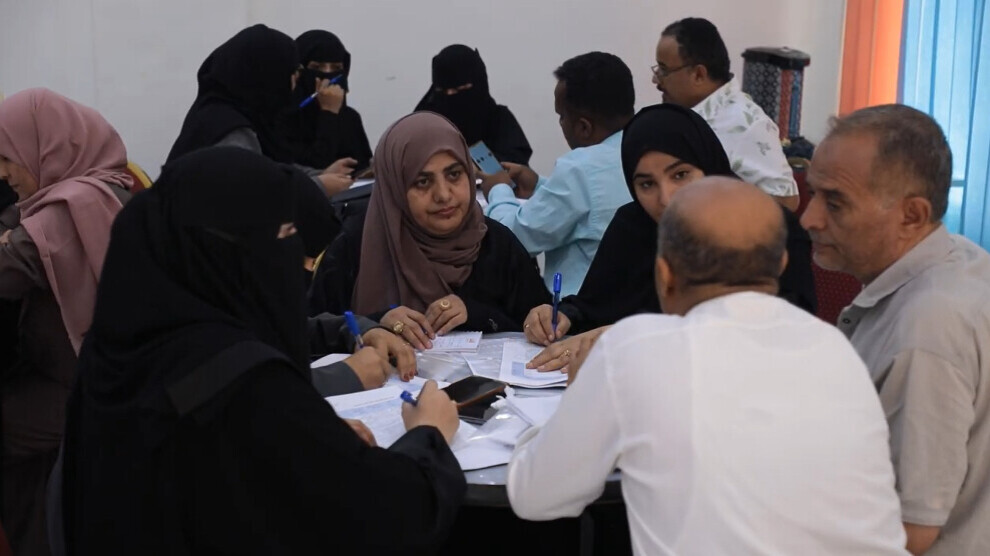
Yemen — Participants in the consultative workshop in Taiz affirmed the necessity of bringing about a radical transformation within Yemeni political parties by strengthening women's capacity building at various organizational levels, and activating financial empowerment through allocating clear budgets that support their political participation and ensure their presence in decision-making positions.
The "Sab'a Youth" Foundation for Development organized the opening consultative workshop yesterday, Thursday, July 9, in the city of Taiz in southwestern Yemen, to launch the Women's Leadership and Influence in Peace Pathways project, with support from the Partners Yemen organization.
The workshop focused on discussing the priorities of the policy paper titled "Policies Behind the Light," in preparation for the second phase of the project. This workshop represents an extension of the first phase, which saw the training of ten women in multiple fields and the production of a policy paper reflecting their vision for enhancing women's participation in peace pathways. Project coordinator Najah Al-Sufyani explained the background dimensions of their efforts, saying: "In the first phase, we worked on training and building the capacities of women in many fields, as well as in writing the policy paper."
Regarding the field track and the work of partner parties, she confirmed that the targeted women prepared the policy paper and held in-depth focus meetings, in addition to individual meetings with the leadership of six political parties in Taiz Governorate—Al-Rashad, Al-Naseri, Al-Islah, the General People's Congress, the Union of Forces, and the Socialist Party—noting that these efforts resulted in the formulation of multiple recommendations within a policy paper titled "Policies Behind the Light."
Regarding the objectives of the current phase and mobilizing support, she explained that the project in its current phase aims to implement the outcomes of the previous phase contained in the policy paper, noting that the opening consultative workshop is being held today to launch the project and review the policy paper priorities, with the participation of first-line political leaders, alongside active women in political work and activists interested in women's participation in public life.
In the context of the project's objectives, the event seeks to break the pattern of formalistic inclusion of women and to push women leaders to the front lines of decision-making centers and executive offices of parties. Najah Al-Sufyani affirmed that the project aims to involve leading women in party leadership at the front lines as well as in decision-making centers. There are women leaders or women who have been included in parties but not in executive or decision-making positions—it is merely formal representation, and the quota system has not been applied in political parties.
Rectifying Women's Status
Regarding the priorities of party action, Huda Al-Haidari, a member of the Central Committee of the Nasserite Unity Organization, said that the consultative session is an important opportunity to focus on building women's capacities at various political levels within parties, in addition to enhancing financial empowerment through allocating clear budgets at various organizational levels.
She expressed her full support for the recommendations reached by the workshop, affirming her desire for parties to implement them, contributing to strengthening women's status within political parties in Taiz and at the national level.
"Society's Lack of Acceptance of Women's Presence"
Regarding the heavy structural and societal obstacles facing women in the political field, lawyer and activist Shainaz Al-Akhli said: "The biggest challenge and obstacle is the patriarchal leadership that controls political parties and does not allow women to be present, despite the existence of qualified and competent women for these leadership positions. Yet they also use the excuse that there are no women sufficiently qualified to lead these parties."
In the context of speaking about social dimensions and inspiring models, she noted that among the most prominent challenges facing women is society's lack of acceptance of their presence in political parties or leadership positions.
In a critical reading of women's self-responsibility and ways to secure party rights, she offered sharp self-criticism, pointing out that many qualified and competent women stand as obstacles to themselves, and do not rebel against their parties or present clear visions to defend their rights that are usurped by men. "Parties use war conditions as a pretext to justify the exclusion of women and the marginalization of their political role."