
Malnutrition and medicine shortages: a specter haunting the children and women of Gaza
Gaza's children and women suffer worsening malnutrition, medicine shortages, and travel hurdles. Mothers struggle to save children amid a suffocating siege, turning basic health rights into a daily survival battle.
Rafif Asleem
Gaza – Despite media reports of a relative improvement in the food situation in the Gaza Strip and the entry of various goods, especially meat, thousands of children, pregnant women, and breastfeeding mothers still suffer from malnutrition and face the danger of medicine shortages and slow death, amid the collapse of the health system in the besieged Strip.
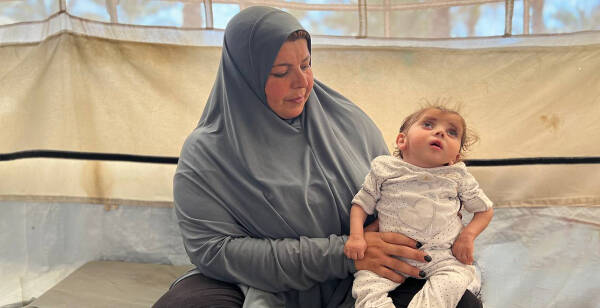
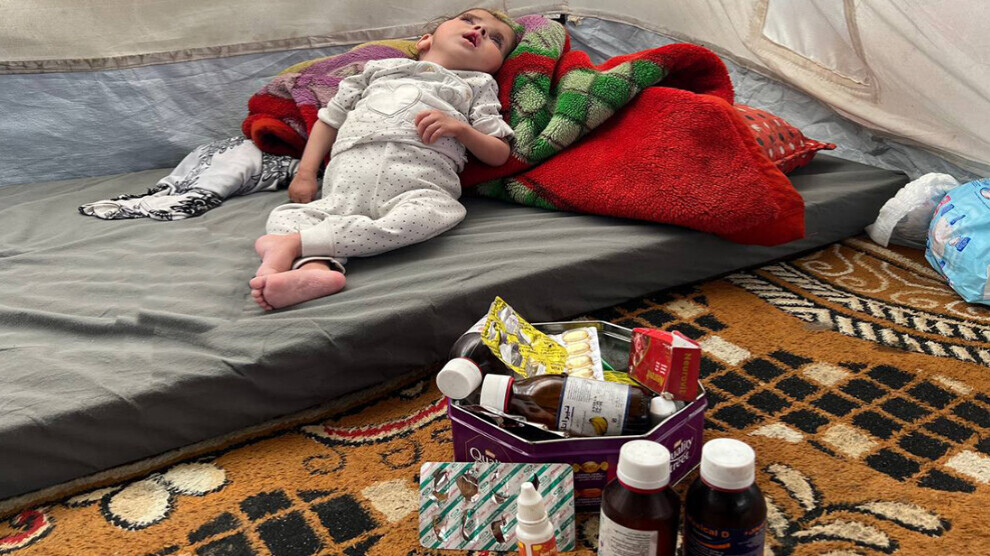
Shahira Haniya gave birth to her daughter "Rital" at a normal weight of three and a half kilograms, before the wave of famine that swept the Gaza Strip at the end of March 2025. The baby's condition remained stable until she reached four months, before the interruption of infant formula and various food types from the markets led to her suffering from malnutrition, the symptoms of which she still experiences to this day.
Haniya explains that her daughter's continued suffering, despite the entry of some food supplies into the Strip, is due to the difficult economic circumstances that prevent the family from providing food and supplements regularly. She points out that the interruption of the medication prescribed for her condition, after being available for a short period, caused her health to deteriorate again after a slight improvement.
Due to her deteriorating health, Rital obtained a medical referral for treatment abroad, but the family was unable to travel due to the complications imposed by Israeli forces on patient movement. Recalling her condition when she was first taken to the hospital, she says that Rital's eyes were bulging upward, her abdomen was swollen, her ribcage was visible, and she had difficulty breathing, without her realizing at the time that these symptoms indicated malnutrition until the doctor told her.
Haniya says that Rital has now recovered from some of those symptoms, but her appearance still reflects her suffering from malnutrition, in addition to breathing problems that worsen with high temperatures or when fires are lit near her. She stresses that her daily meal prepared with water boiled over a fire (not cooking gas) has worsened her health condition, as the milk mixes with ash and pollutants resulting from the fire.
Shahira Haniya struggles to find treatment for the child. Government medical centers do not provide all the required medicines, and finding them in private pharmacies sometimes requires traveling long distances from the south to the north of the Strip to obtain a single type of medication. She notes that the child needs appropriate painkillers and a powered ventilator during the summer, in the midst of a dilapidated tent and a lack of milk and medicine.
She adds that the child improves and starts moving her foot and hand, but when the medicine runs out, she returns to square one and becomes unable to make any movement. Her heartbeat is also affected, and she suffers from strong convulsions that nearly kill her. She points out that she tries to provide first aid and physiotherapy sessions for her daughter daily inside the tent, but she fears losing her, after she lost her three sons, her home, and her family during the war on the Gaza Strip.
Risks multiplied for mothers and fetuses
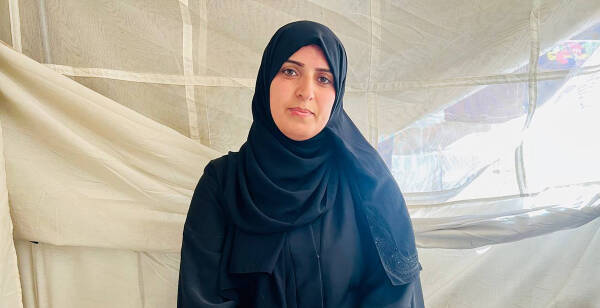
For her part, Ghaliya Obaid says she is four months pregnant with her third child. Her pregnancy is classified as high‑risk due to inhaling large amounts of gases during the war and staying in the northern Strip throughout that period.
She explains that she previously gave birth to a child suffering from atrophy and hydrocephalus as a result of exposure to those gases and her inability during pregnancy to obtain appropriate treatment that would limit fetal deformities and protect the health of mother and child.
She points out that medical reports confirm that she is currently suffering from both malnutrition and high‑risk pregnancy simultaneously, which requires special treatment that has been replaced by another medication significantly less effective than the primary treatment. This raises the probability of giving birth to a child with congenital malformations to more than 80%, according to doctors' estimates, which pushes her to try to expedite surgery to terminate the pregnancy if fetal abnormalities are confirmed.
She explains that she was unable to breastfeed her second child due to malnutrition, forcing her to rely on formula milk until the child refused breastfeeding. She adds that she was later able to rectify the situation through some available nutritional supplements. She adds that before the war, those treatments were obtained from the nearest medical point with monthly follow‑up appointments to monitor the condition of the mother and fetus. If delayed, the mother would be contacted and a nurse would be sent to the home at the time of delivery.
She points out that purchasing medicines at her own expense, when available, is a great financial burden, amid soaring prices and deteriorating economic conditions in Gaza. She concludes by saying that she urgently needs appropriate treatment and medical devices, especially since her pregnancy came suddenly, while the doctor told her that her body needs two years to recover from the effects of those toxins, in addition to her need for healthy food such as fish, which she can no longer afford.
It is worth noting that the World Health Organization (WHO) had warned that more than 10,000 children and about 37,000 pregnant and breastfeeding women are at risk of acute malnutrition, indicating that "slow death" threatens these groups due to the lack of basic supplies.
Meanwhile, Doctors Without Borders called for the immediate and unconditional entry of humanitarian aid, medical supplies, and food into the Gaza Strip.