
Women’s Body protects gains through administrative integration and shared vision
Rojava’s Women’s Body integrated with Syria’s Family commission under interim government agreements, Prioritizing the preservation of women’s hard-won gains and achievements.
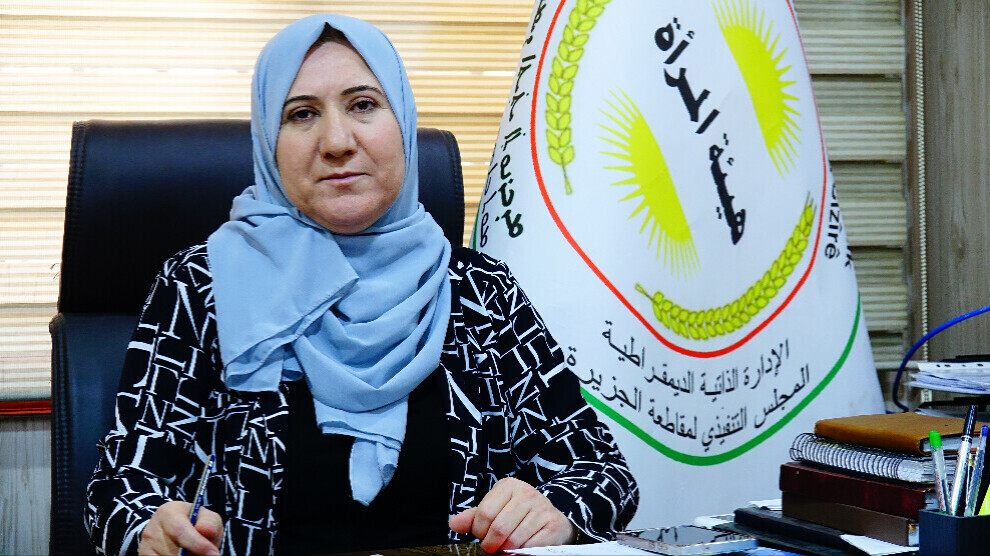
SURKIL SHEIKHO
Qamishlo_Within the framework of the January 29 agreement between the Syrian Democratic Forces (SDF) and the interim Syrian government, work is underway to integrate the institutions and bodies of the Autonomous Administration and women’s organizations in Rojava.
On May 22, the Women’s Body of the Executive Council in the Jazira Province held a meeting with the Syrian Commission for Family and Population Affaris in Damascus. During the meeting, the file of how to integrate the Women’s Body_one of the main bodies of the Autonomous Administration since its establishment in 2014_was discussed.
Commenting on the intefration process and the changes that may occur to the body’s system according to the requirements of the stage and the ongoing process, Rûhat Xelîl, the co-chair of the Women's Body of the Executive Council in the Jazira Province, said: "Our primary task is to protect the gains."
She added: "Over 14 years of revolution, the Women's Body has achieved very significant accomplishments in the social, educational, and legal fields related to the protection of women. Today, we are required to protect these gains and ensure their continuity."
After extensive study, the Women's Body found, as our interlocutor says, that it could integrate with the Syrian Commission for Family and Population Affairs "because the areas we work in are very close, and this was the most suitable option."
What Was Discussed in the First Meeting?
Rûhat Xelîl also addressed the relationships that have been built and the meetings related to the integration process. "After establishing communication channels, our first meeting was held in Damascus. During it, we discussed women's gains in Rojava, the Family and Child Law, principles of women's rights, the 50% representation quota for women in Autonomous Administration institutions and decision-making positions, as well as the co-presidency system and many other issues."
She affirmed that these topics attracted the attention of the Syrian Commission for Family and Population Affairs, and many questions were raised regarding them. "The first meeting was positive and concluded with the outcome that the Women's Body will remain in place, with some amendments to its system, with the affirmation that no employee would be dismissed from their job and that other affiliated institutions would not be dismantled."
Rûhat Xelîl also noted that after exchanging the internal regulations between the two bodies and sending the number of Women's Body employees, the first steps of the integration process were taken. "Our second meeting will also be held in Damascus next week, to discuss the final steps regarding integration, as well as the opening of the Women's Body in Al-Hasakah, whose building is currently being prepared."
Changes to the System and the Peoposal to change the Name of the Women’s Body
The proposal submitted by the Women’s Body regarding changing the name of the Syrian Commission for Family and Poputation Affairs includes “changing the name of our body to the Women, Family, and Population Commission. To date, this proposal has been 90% approved, but we are still awaiting the final official decision. According to the internal regulations of the commission in Damascus, other offices will be added to our body, and current employees will be redistributed accordingly.”
These change do not include the Women’s and Children’s Centers affiliated with the body “Nurseries and children’s homes will also remain. There are discussions that if nurseries and children’s homes are not included within the internal regulations of the commission in Damascus, we can here link them to other bodies. The most important thing is that they remain in the Jazira region of Rojava.”
Women's Protection Centers Will Remain Affiliated with the Women's Body
Our interlocutor clarified that the Women's Protection Centers will remain linked to the Women's Body. "The women we protect from violence reside in rehabilitation centers, where they receive courses in languages, computers, and sewing, in addition to psychological support. Many women have achieved success stories, opened their own projects, and become independent working women. In the future, our centers will be opened in all Syrian provinces."
Challenges and the Importance of Solidarity
Rûhat Xelîl also spoke about the administrative and intellectual challenges facing the integration process. "Administratively, there will be no major obstacles, because the harder challenge is societal awareness. There is an important point we must work on, which is introducing women's laws, as they are the first successful experience in Syria. Naturally, recognition of women's laws will be difficult in a society that has grown up and been raised on patriarchal and masculine mentality. But we will make great efforts and work continuously. What is required of us is to deepen and expand our relationships with women, until we reach a shared vision that includes women from all Syrian cities, and then we demand that women's law become an approved and implemented system."
The Struggle to Build a More Just Society
Rûhat Xelîl, co-chair of the Women's Body of the Executive Council in the Jazira Province, concluded her remarks with this message addressed to the women of Syria: "Syrian women must strengthen their presence in political, diplomatic, economic, and social fields, and we must build a shared solidarity that enables us to struggle against and overcome the patriarchal mentality. For women to attain a greater status, equality must be achieved and creativity must be enhanced, so that we can build a more just society."