
UN: Current Climate Policies Are Incapable of Saving the Planet
Global greenhouse gas emissions stabilized at record levels, a UN "Emissions Gap" report warns, confirming Earth faces 2.6–2.8°C temperature rise by century's end.
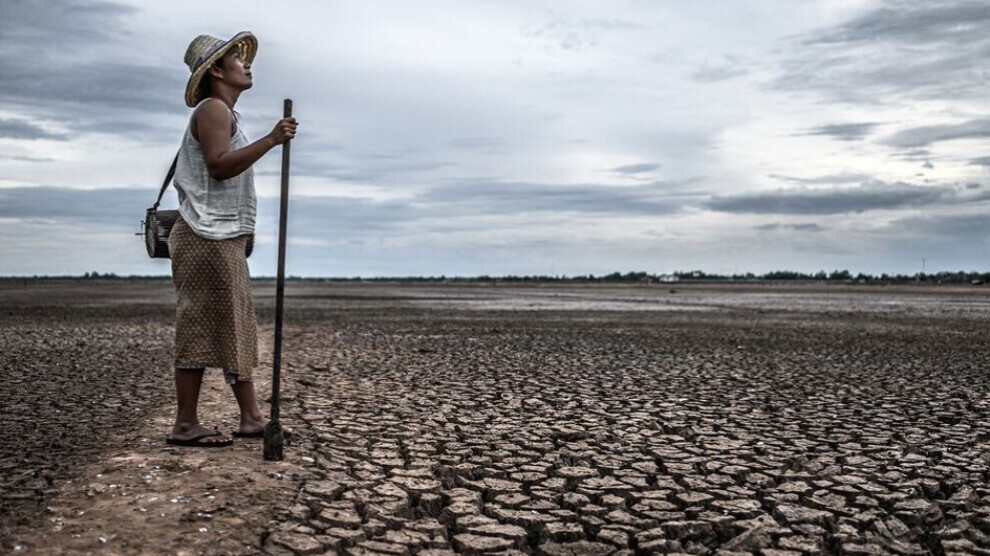
NEWS CENTER– Global greenhouse gas emissions constitute the biggest environmental challenge of our current era, as they lead to accelerating global warming and climate change, which threatens ecosystems and human stability, and pushes countries toward intensifying their efforts to transition to clean energy.
The United Nations Environment Programme's "Emissions Gap" report issued today, Wednesday, 21 October, stated that global greenhouse gas emissions stabilized at record levels during 2025, warning that the planet Earth faces the risk of a temperature rise of between 2.6 and 2.8 degrees Celsius during the current century, even if governments adhere to their recent climate pledges.
The Secretary-General of the United Nations stressed the seriousness of the situation, confirming that current national climate plans and policies are still critically below the required level, and are not sufficient to limit this alarming global warming.
The report also showed that global warming is currently expected to exceed previous estimates, with the most optimistic scenario expecting average temperatures to rise to between 1.7 and 1.8 degrees Celsius above pre-industrial levels by the middle of the century.
Despite the rapid expansion of renewable energy and climate policies that are reducing emissions in many countries, the report noted that "urgent and drastic" reductions are needed to achieve the best possible outcomes.
The United Nations Environment Programme report stated that greenhouse gas emissions must decrease by 18% from 2025 levels by 2030, 45% by 2035, and 69% by 2040. Current national plans are limited to reducing emissions by only five to 8% by 2030, and 11 to 15% by 2035.
The report indicated that the planet Earth faces the risk of a temperature rise of 2.8 degrees Celsius by 2100 if current policies continue, while this expected warming decreases to 2.6 degrees Celsius if countries implement all their current climate commitments.
In the context of international preparations for holding the thirty-first Conference of the Parties on Climate Change (COP31) in Turkey, the Secretary-General of the United Nations urged the international community to adhere to the efforts made to reduce emissions, confirming that they are the direct factor in fueling fires, floods, and other destructive environmental disasters.
The United Nations Environment Programme acknowledged in its latest report that curbing the rise in Earth's temperature at the 1.5 degrees Celsius threshold without exceeding it is no longer a possible option. However, the report presented a new path based on the "lowest possible overshoot" of this threshold, noting that there is a chance of up to 50% for temperatures to return to the level of 1.5 degrees Celsius or less by 2100.
The report explained that the climate plans submitted by countries since last year have not made any tangible difference in future expectations for global warming. It also confirmed that success in reducing temperatures again and returning to the 1.5-degree barrier will depend entirely on large-scale carbon removal and extraction operations; a path that experts have warned is still surrounded by high rates of doubt and uncertainty.