
The Triad of Conflict, Drought, and Funding Shortage Pushes Darfur and Kordofan Toward Famine
The IPC initiative revealed worsening famine risk in Sudan, with a historic humanitarian catastrophe threatening millions in Darfur and Kordofan due to conflict, drought, and funding shortages.
NEWS CENTER_The conflict in Sudan erupted in mid-April 2023, leaving behind thousands of dead and wounded and massive destructions of infrastructure, amid an escalating famine and record displacement waaves, threatening the country with a humanitarian catastrophe requiring urgent international intervention to save millions of lives.
Sudan faces a growing risk of famine in several areas affected by the ongoing conflict in the country, according to a new alert issued by the Integrated Food Security Phase Classifivation (IPC)initiative yesterday, Monday, 12 October.
This humanitarian crisis is worsening as a result of the combination of several factors, most notably the drought caused by the "El Niño" phenomenon, the acute shortage of relief funding, in addition to security restrictions impeding the access of humanitarian aid.
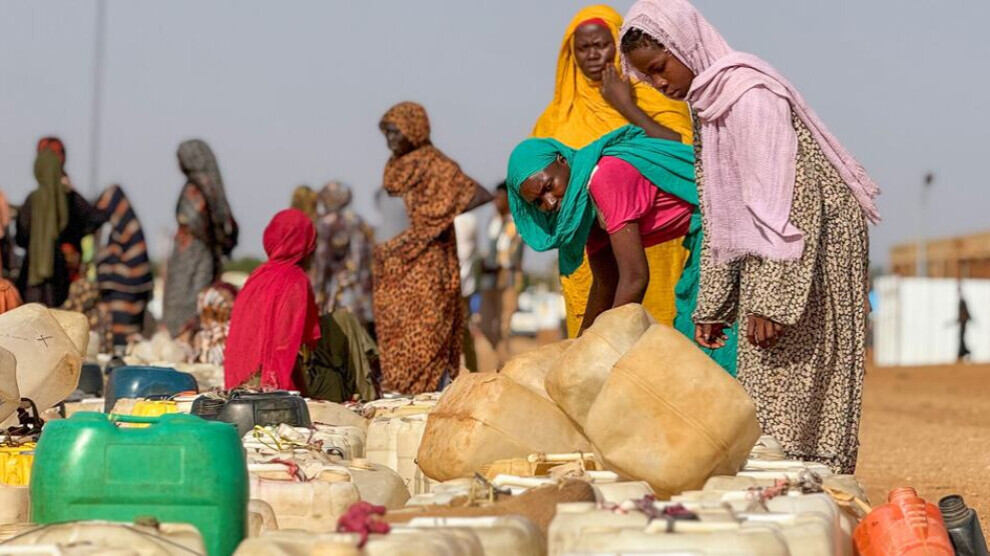
The initiative explained that the manifestations of this suffering are evident in areas such as Al-Obeid city, where women and children of Black African origin line up at external distribution points, carrying containers and plastic bags to obtain chlorinated drinking water transported by trucks.
The alert issued by the Integrated Food Security Phase Classification (IPC) initiative warned of the accelerating risk of famine in parts of the Greater Darfur and Greater Kordofan regions, driven by a triad of armed conflicts, widespread displacement waves, and severe drought conditions.
Food Insecurity Raises Concern
The latest data show increasing and alarming levels of food insecurity and acute malnutrition in several Sudanese areas. Severe drought striking most parts of Greater Darfur, alongside the dual impact of conflict and scarce rainfall in Greater Kordofan, threatens the rapid depletion and exhaustion of the remaining food stocks of the population.
The IPC initiative stressed the urgent need to ensure unimpeded access of aid to conflict areas in Kordofan, alongside providing immediate additional funding to expand the scope of humanitarian operations and avoid catastrophic consequences and greater loss of life.
It noted that the conditions in most areas previously classified as "at risk of famine" in last May's analysis remain extremely concerning, while new evidence and indicators point to the worsening of acute malnutrition rates and their widening to include additional localities.
It warned of the worsening famine risk in Sudan and the country's approach to a humanitarian catastrophe of historic dimensions whose effects may extend to the beginning of 2027, confirming that the conflict, displacement waves, and drought have caused a rapid depletion of food stocks in large parts of the Greater Darfur and Greater Kordofan regions.
The initiative also monitored the displacement of more than 300,000 people in the Greater Kordofan region since October of last year, as violent fighting pushed agricultural communities toward Al-Obeid city, amid diminishing livelihood opportunities due to insecurity.
Regarding relief challenges, it explained that the gap is widening between growing needs and the size of the response on the ground; humanitarian operations face an acute funding shortage, with the coverage rate of the annual response plan not exceeding 50%. This gap coincides with strict security restrictions impeding the access of aid, recently manifested in two trucks belonging to the World Food Programme being attacked, resulting in the death of one driver.