
The Kurdish language between identity and constitution... demands for its adoption as a second language in Syria
Calls in Rojava for Kurdish as second official language in Syria's new constitution, as it's essential to Kurdish identity. Women affirm this step protects cultural identity and consolidates Kurdish presence.
Nagham Jajan
Qamishlo – Discussions have recently intensified regarding the place of the Kurdish language in the new Syrian constitution, coinciding with rising voices demanding its recognition as a second official language, as an integral part of the identity of millions of Kurdish citizens in the country.
These demands come within the framework of millions of Kurds in Syria seeking to establish their linguistic and cultural rights after decades of marginalization.
In this context, Kurdish language teacher Hanan Bakr and Hendren Issa, a student in the Culture Department at the University of Rojava, spoke about the importance of including Kurdish language education in the new constitution, affirming that the issue is not only about language but about identity and existence.
The Rojava revolution… a linguistic and cultural revolution
Kurdish language teacher Hanan Bakr pointed out that the Rojava revolution was not only political but also carried a deep cultural transformation, as it opened the door for the Kurdish people to reclaim their language, which had been fought for decades. "Language is the existence of every people. Every country in the world has a language and an identity. We as Kurds were deprived of our language. The Rojava revolution gave us a historic opportunity to revive and protect our language after authoritarian and capitalist systems distanced us from it for many years."
From summer courses to universities
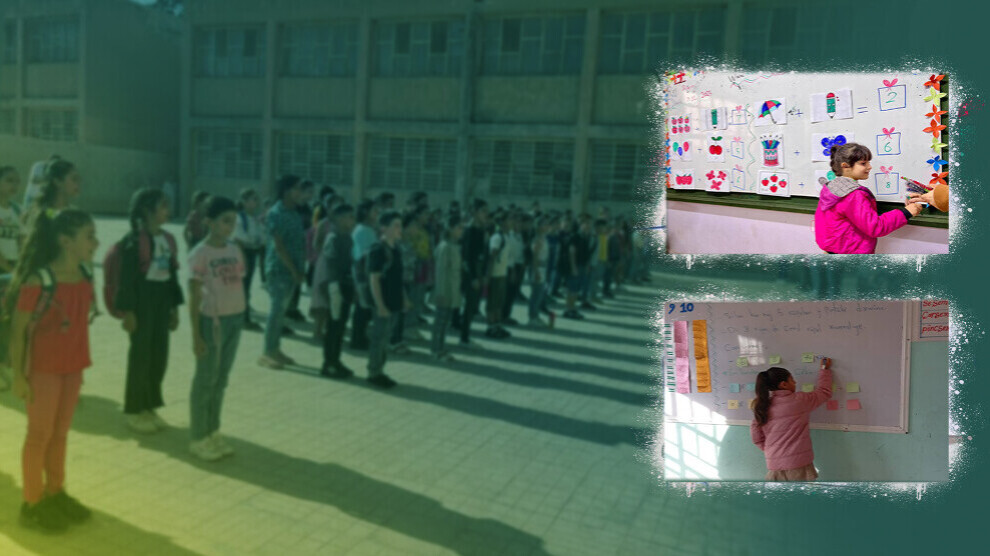
She drew attention to the beginnings of Kurdish education in Rojava, explaining that it started with summer courses before the experience gradually expanded. "We began learning the language through courses, then we moved to schools. We faced many obstacles from society and from the Ba'ath system, but we continued our struggle. We ran primary schools, then in 2017 we moved to middle schools, then to high schools, and today we have reached universities. This development was not easy, but it was necessary."
The current government's mentality is a continuation of the Ba'ath approach
Hanan Bakr believes that the interim government is not much different from the Ba'ath regime in its stance on the Kurdish language. "The interim government does not recognize the Kurdish people, and insists on allocating only two hours for the Kurdish language in schools. Our struggle as teachers was with our pens and notebooks. It is essential for Kurdish to become the second language in Syria, and we will continue our efforts until it is recognized in the new constitution."
Language… identity and existence
For her part, student Hendren Issa affirms that recognition of the Kurdish language in the constitution is not only a cultural demand but a fundamental right of a people seeking to preserve their existence.
She added: "There is no difference between the current government and the Ba'ath regime; both have not recognized the Kurdish language. We must hold onto our language because it is our existence, our body, and our identity. Recognizing it in the constitution is a necessary step to guarantee our rights."