
Salé Festival Concludes Its Activities with Discussions on "The Feminist Movement" and "Civil Society and Cinema"
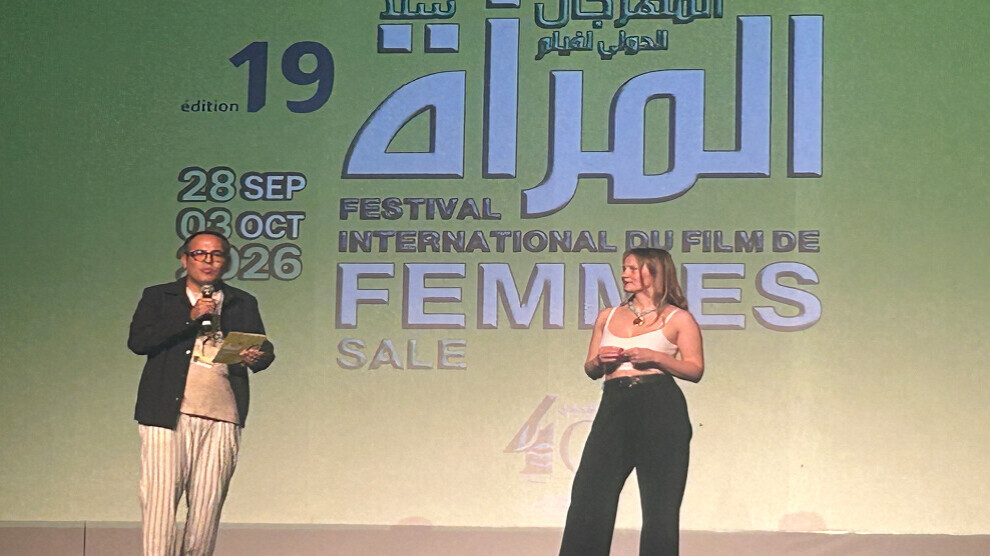
The International Women's Film Festival in Salé concluded its nineteenth edition, shedding light on feminist issues and women's rights, and the role of cinema in societal change and advocacy for humanitarian causes, alongside honoring the winning films.
RAJAA KHAYRAT
MOROCCO- The curtain came down on the activities of the nineteenth edition of the International Women’s Film Festival yesterday, Saturday, the thired of October, where a seminar was organized on “Civil Society and Cinema,” and a book by Moroccan researcher and United Nations expert Aicha Belarbi was presented under the title "Equality Between Women and Men: Feminists Facing the Test in Morocco."
Multiple Feminist Forms in Morocco
The festival has also been accustomed in its previous editions to presenting books and publications by Moroccan women writers. Within the framework of the festival's activities, a meeting was organized during which a book by Moroccan researcher, politician, and United Nations expert Aicha Belarbi was presented.
The book addresses the history of the feminist movement in Morocco. Researcher Aicha Belarbi said that feminists demanded the activation of the principle of equality, fought forms of discrimination, and resorted to ijtihad to keep pace with international conventions. Successive generations of women and men contributed to forming this feminist thought, which is credited with achieving a set of gains.
She confirmed that there is no "one-size-fits-all feminism," nor a feminist formula dictated and imposed by the West, but rather multiple feminisms, dynamic, evolving, and persistent. She pointed to another type of feminism, which she called "state feminism," in reference to appointing a woman at the head of the government, highlighting that when it comes to high-level decisions, "state feminism" appears, alongside the legal aspect that reinforces this direction (the Moroccan constitution).
She noted that over the decades, feminists succeeded in making their voices heard, their proposals were taken into consideration, and many of their initiatives were adopted, which pushed Moroccan women to question the prevailing arbitrariness and the foundations of the patriarchal system. She pointed to aspects of social inequality, where entrenching equality is still fraught with obstacles, confirming that the path of struggle is still long and requires a lot of effort.
Aicha Belarbi explained that the book came as a result of her human rights and political engagement in defending the principle of equality, entrenching the culture of human rights, and interpreting religious texts in a manner consistent with the development of society. She also called for a society free of gender-based discrimination.
She spoke at length about the monopoly of power by men in multiple fields, including the political field. She also called for changing laws that she considered discriminatory against women, preventing them from reaching decision-making centers.
Regarding the failure of women from the left to reach the presidency of the government, she explained that the left no longer has the same weight it had previously, especially after its "dramatic" decline in the recent legislative elections. She added that what is required of the current head of government is to respond to the aspirations of the Moroccan people, and to listen to the various partners and actors.
Cinema Is a Civil Act
In another axis, participants in a meeting organized within the framework of the festival's activities shed light on the topic of "Cinema and Civil Society," highlighting the ambiguous relationship between cinema as a creative and aesthetic work, and cinema as a civil, activist, and advocacy act, especially when it touches some complex humanitarian issues.
The attendees agreed that cinema can be a means of advocacy and defense of human rights and just causes. But the question they raised is: Is cinema required to defend human rights, or is it a creative, aesthetic art that is not required to be dragged into issues that occupy civil work?
Participants wondered about the stereotypical images broadcast in cinema and on screens about women, which entrench the masculine mentality that reduces women to traditional roles.
They addressed documentaries that shed light on women who marked the history of Morocco, whether through early engagement in the national movement, such as Malika El Fassi, who is the only woman signatory to the document demanding independence on 11 January 1944, a film directed by Moroccan Laila Triki, then the film "A Woman Named Rachid," which tells the biography of the fighter Fatna El Bouih, who was arrested in 1977 in Derb Moulay Cherif along with other women, and her jailers called her "Rachid" to break her will and humiliate her.
The attendees concluded that cinema must be viewed not only as an expressive art but as a strong industry capable of advancing development, considering that cinema, despite its creative and aesthetic nature, can be a powerful language and an essential partner for civil society in defending human rights and advocating for just causes.
"Hijra" Film Wins the Festival's Grand Prize
The closing ceremony at Hollywood Cinema in the Moroccan city of Salé witnessed the awarding of prizes to the winning films in the official competition for feature-length narrative films and documentaries. "Hijra" by Saudi director Shahad Ameen won the festival's Grand Prize, while "Rue Malaga" by Moroccan director Maryam Touzani received the Jury Prize, and "Shana" by French director Leila Pinel won the First Work Prize.
The two actresses Khairia Nazmi and Lamare Fadden, the stars of "Hijra" by director Shahad Ameen, shared the Best Female Performance Prize, while the Best Actor Prize went to Patrick Yvon for his role in "The Peak of Everything" by Canadian director Anne Émond. As for the Best Documentary Prize, it went to "Out of School" by Moroccan director Hind Bensari.