
Women, resistance, and memory... why do I stand in solidarity with the women of Rojava?
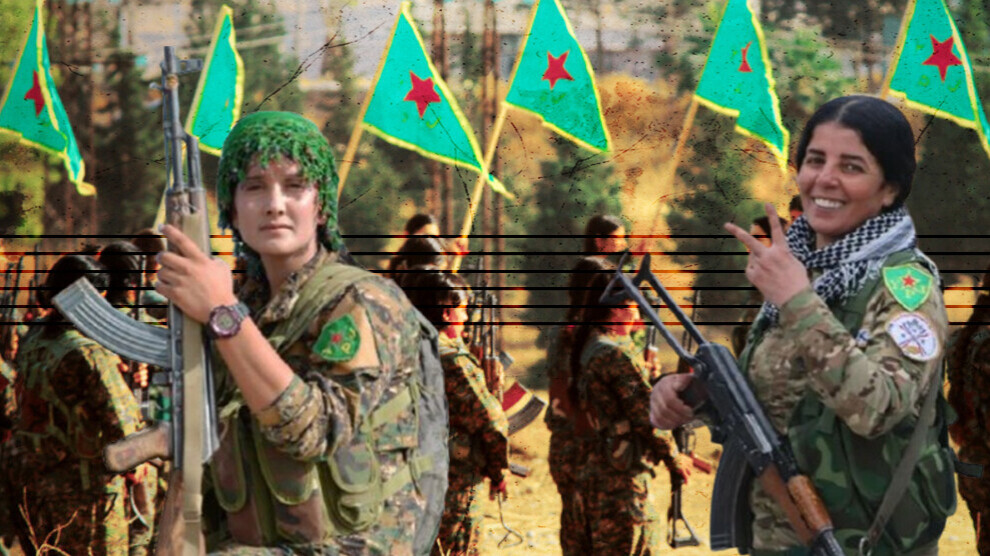
Article by Algerian journalist Najwa Rahm
What brings together Algerian women and the women of Rojava is not the glorification of violence, but the experience of bearing the burdens of the most difficult moments, and the insistence on not remaining merely a margin within a history that is often written only in men's names.
Women should not be summoned in times of crisis and then forgotten after it ends. The women who participated in resisting colonialism, fear, and violence have the right to have their stories told, and to be recognized as part of the political and social history of their peoples, not as fleeting images that appear only in wartime.
As an Algerian woman, I cannot look at the experience of the women of Rojava in isolation from the history of Algerian women themselves. Algerian women were never absent from society's battles; they were an essential part of the resistance to French colonialism and the war of liberation, in which women paid heavy prices with their lives, freedom, and stability. Women carried weapons, delivered messages, and participated in organization, support, and confrontation – not because war was an ideal choice, but because colonialism imposed a reality that did not always leave them safe options.
For this reason, the debate about the women of Rojava seems very familiar to me. Every time women appear in spaces related to protection, resistance, or political decision‑making, their presence becomes a subject of doubt or astonishment, as if power or political action are still considered primarily male domains, while women are often seen only as victims of war, not as actors within its complex moments.
However, solidarity with the women of Rojava does not at all mean glorifying war or celebrating violence. Feminism cannot be a call to militarization, but rather a defense of a world in which women would not have to live amidst fear, collapse, and ongoing conflicts. Yet rejecting war does not also mean ignoring the women who found themselves inside those circumstances, or treating their experiences as a passing detail that can be erased from collective memory.
What draws attention in the experience of the women of Rojava is not only their participation in defending their communities, but also the scale of the questions their presence in the public and political sphere has imposed. Societies accustomed to seeing men as the primary actors in matters of protection and power still deal cautiously with women who step out of the traditional roles imposed on them.
Here, specifically, the experience of Algerian women meets that of the women of Rojava. In both cases, women were strongly present when their societies were threatened, but history and politics later tried to return many of them to the margins, or reduce them to fleeting symbolic images rather than recognizing them as a real part of shaping major transformations.
Women do not need wars to prove their existence, but when circumstances force them to endure the most difficult moments, the least they deserve is not to have their presence erased after the crisis ends. Recognition of women should not be an exception imposed by wars, but an ongoing right within memory, history, and the public sphere.