
Palestinian Female Journalists Participate in the Media Integrity and Countering Disinformation Conference
Palestinian femalw journalists discuss the challenges of media work in Gaza and ways to counter disinformation and enhance public trust in media institutions.
NAGHAM KARAJA
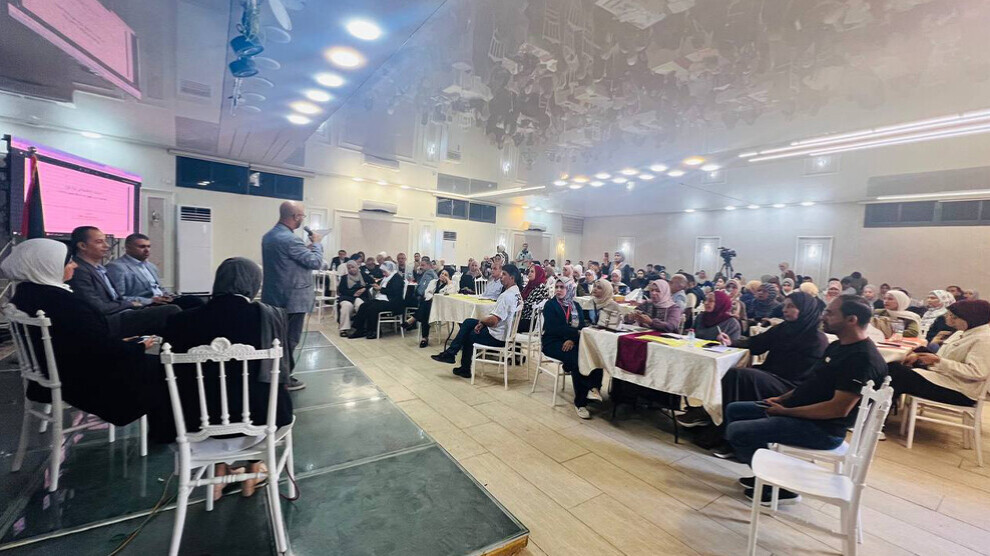
PALESTINE_Journalists, media professionals, and specialists discussed during the “Media Integrity and Civil Dialogue” conference, the role of the media in confronting disinformation and hate speech, and enhancing trust between media institutions and society, in light of the challenges imposed by the war on journalistic work in the Gaza Strip in Palestine. The conference witnessed the presentation of working papers and media experiences, alongside reviewing the outputs of a project aimed at enhancing professionalism, verifying information, and opening spaces for dialogue and community participation.
The Center for Development and Media Community (CDMC) organized yesterday, Monday, 19 October, the conference within the project "Building Truth and Resilience: Empowering Media and Society for Recovery in the Gaza Strip," in partnership with the French Media Foundation, and with the support of the European Union according to the information related to the project.
Training to Confront Disinformation
Nourhan Al-Tabatibi, coordinator of the Media Integrity and Civil Dialogue project, said that the project came to provide a space that allows different voices to express themselves, and helps journalists develop their capabilities in conveying the truth with professionalism and integrity.
She added that about 50 male and female journalists received, over the past months, training that addressed confronting media disinformation and hate speech, verifying information, and building bridges of trust between the media and the local community.
She explained that the importance of these trainings is not limited to acquiring technical skills for verifying news, but extends to entrenching the journalist's responsibility toward the audience, and enhancing their ability to distinguish between reliable information and content that may contribute to spreading rumors or fueling societal disputes.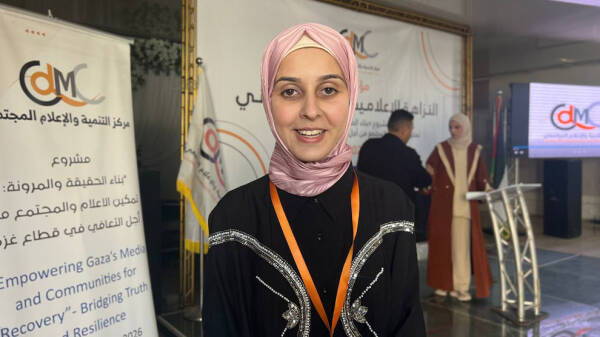
Professionalism Is a Responsibility Toward Society
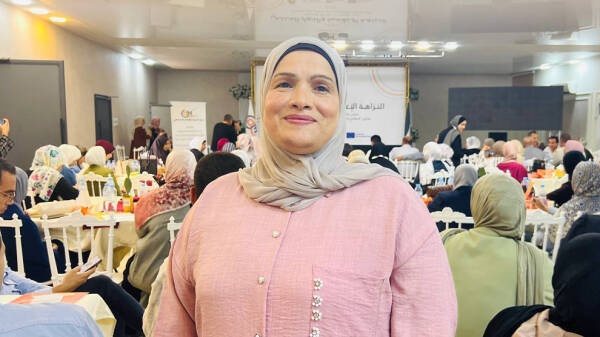
For her part, journalist Mona Bakr said that the media's role is not limited to conveying news, but extends to contributing to building a more aware society capable of confronting challenges, by providing accurate information, verifying its sources, and avoiding publishing content that may harm individuals or exacerbate societal tensions.
She adds: "Protecting the privacy of sources and handling data safely are among the fundamental issues that should govern journalistic practice, especially when the coverage relates to people living in difficult conditions or facing risks because of information published about them."
She confirmed that public trust is not built merely by increasing the number of followers or achieving reach, but is founded on the accuracy of news, returning to its primary sources, and not manipulating information or taking it out of context.
She explained that the journalist's commitment to these standards contributes to limiting the spread of misleading information and false facts, and supports societal cohesion and civil peace, noting that professionalism also requires acknowledging and correcting mistakes, and clearly distinguishing between facts and opinions.
Challenges Facing Female Journalists During the War
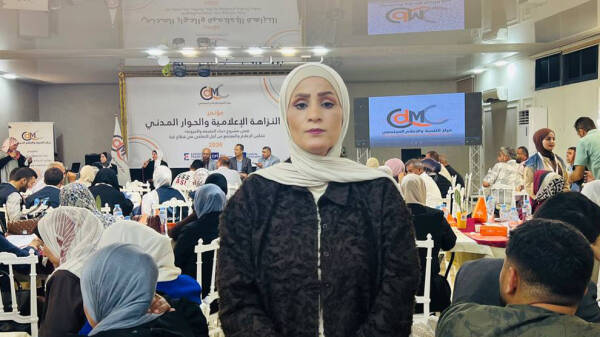
For her part, director and journalist Mahi Adwan addressed the conditions that female journalists faced during their work in the Gaza Strip throughout the war, in light of bombardment, displacement, harsh living conditions, and the limited capabilities available for media work.
She noted that female journalists faced difficulties in continuing field coverage, accessing reliable sources, and gathering and verifying information in an environment where events change rapidly, while field risks impose additional restrictions on movement and work.
She added that the challenges are not only related to the possibility of accessing event sites or possessing the necessary equipment, but also include preserving the safety of female journalists and sources, and verifying information amid disrupted communications and the difficulty of reaching the concerned parties in some circumstances.
She confirmed that these challenges make adherence to professional standards a doubled necessity, as journalists must balance between the speed of conveying developments and the responsibility for the accuracy of what they publish, while taking into account the humanitarian impact of the information, images, and testimonies they present to the audience.
She noted the importance of providing a more supportive work environment for female journalists, enhancing training and professional cooperation opportunities, and providing the tools that help them continue coverage and verify information despite exceptional circumstances.
The conference concluded by emphasizing the necessity of enhancing media integrity and çivil dialogue, and transforming Professional principles into practical through continuous tranining on verifying information, confronting disinformation and hate speech, adhering to Professional ethics and protecting privacy, and supporting male and female journalists, especially in Gaza.
Participants also recommended supporting Palestinian media platforms, developing digital tools to produce reliable content, expanding societal dialogue to restore trust in the media and limit rumors, and enhancing çivil peace and societal cohesion.