
National Seminar in Tunisia Calls for Urgent Reform of Farm Workers' Transport System
Participants in Sidi Bouzid demand safe transport and decent working conditions for agricultural workers, as shocking statistics reveal 1,093 injuries and 74 deaths since 2015.
IKHLAS AL-HAMROUNI
Tunis — Participants in the national seminar in Sidi Bouzid agreed on the gravity of unsafe transport for women agricultural workers, emphasizing the need to reform the system, enhance occupational safety and health, and provide safe transport and working conditions that preserve the dignity of women in rural areas.
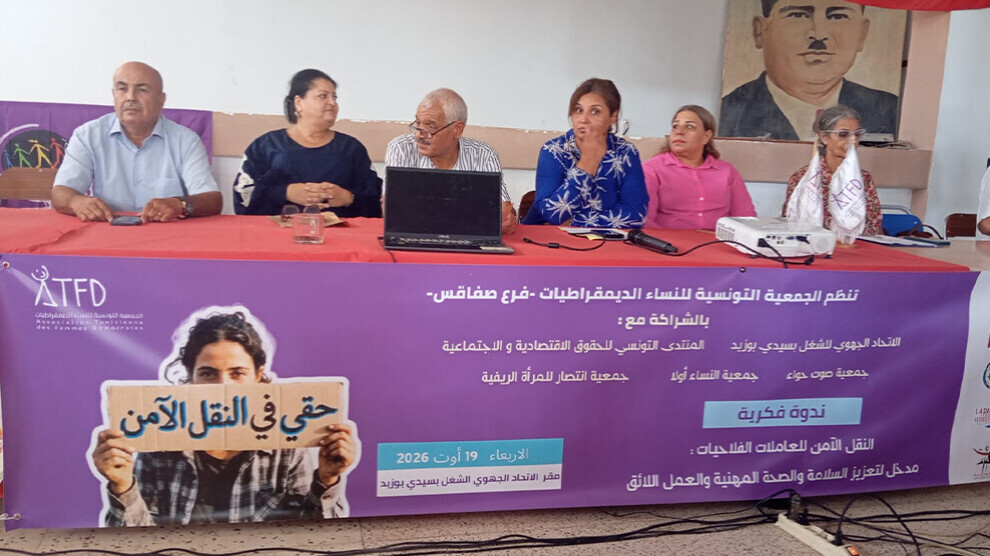
The city of Sidi Bouzid hosted a national seminar yesterday, Wednesday, August 19, on "Safe Transport for Women Working in the Agricultural Sector: A Gateway to Enhancing Occupational Safety and Health and Decent Work," at the headquarters of the Regional Union of Labor. The event brought together rights activists, trade unionists, civil society actors, and women agricultural workers from various regions to seek radical solutions to a phenomenon that claims dozens of lives annually.
The seminar was organized on the initiative of the "Sfax branch of the Tunisian Association of Democratic Women," in partnership with the "Regional Union of Labor in Sidi Bouzid," the "Tunisian Forum for Economic and Social Rights," along with the associations "Women First," "Hawa's Voice in Al-Riqab," and "Victory for Rural Women."
In her opening speech, Sabria Freiha, representative of the Tunisian Association of Democratic Women, Sfax branch, emphasized that the choice of Sidi Bouzid to host this seminar was not arbitrary, but due to the symbolism of this region, which tops the list of governorates most affected by transport accidents involving women agricultural workers.
She explained that this seminar comes in the context of seeking to overcome the pain and grief that emerged from the recent tragedy in Al-Mazouna last July, which resulted in the deaths of three workers and injuries to 12 others of varying severity.
She stressed that organizing this seminar came "from the inspiration of the incident," expressing the will to overcome the pain in order to build a transport system in a sector that has long been a support for all Tunisians, but unfortunately does not receive recognition from state institutions and broad sectors of the Tunisian people.
She added: "We do not want this occasion to be merely a diagnosis of a painful reality, but a space for dialogue, joint activation, and the search for practical solutions that make the right of women agricultural workers to safe transport and work in conditions that preserve their dignity, health, and safety a real right, not just a slogan we repeat."
Sabria Freiha raised a number of critical questions that the seminar seeks to answer: "We are here in this seminar to ask clearly: How can we make transport safer? Who bears responsibility? How can we ensure the application of occupational safety and health conditions? And how can we address accidents after they occur and prevent them before they happen?" She affirmed the necessity of placing women agricultural workers at the heart of the discussion and listening to their experiences, as they are best able to describe the risks they face during work and the solutions that could respond to their reality.
The representative of the Tunisian Association of Democratic Women concluded her speech by affirming that occupational safety is not a privilege for one group over another, decent work is not a slogan, and safe transport is not a luxury—these are rights linked to human dignity. She expressed hope that this meeting would be an opportunity to unify the efforts of various stakeholders, emphasizing that speaking about safe transport for women workers in the agricultural sector is fundamentally speaking about the right to life, the right to health, the right to decent work, and the right to dignity.
Shocking Statistics
Regarding the reality of this sector and proposed solutions, Hayat Attar, a member of the Tunisian Forum for Economic and Social Rights, revealed shocking figures reflecting the scale of the tragedy suffered by women agricultural workers in Tunisia. "Since 2015, we at the forum have been monitoring accidents, not just for the purpose of recording numbers, but to assess this phenomenon." She affirmed that the mechanisms established by the state to protect women working in the agricultural sector have failed to protect women, as the number of accidents rises day by day.
She revealed that the forum's statistics recorded 1,093 injuries and 74 deaths since 2015, distributed across 94 transport accidents involving women agricultural workers, noting that a large proportion of these accidents occurred after 2019—specifically about 63% after the enactment of laws such as Law 51 and Decree No. 4.
She explained that the majority of these accidents—more than half, or 55.3%—occurred in three governorates: Sidi Bouzid, Kairouan, and Kasserine. Sidi Bouzid tops the list with 24 accidents, followed by Kairouan in second place, then Kasserine in third.
Hayat Attar attributed the high number of accidents in these regions to their agricultural character, which employs large numbers of women. The number of women workers in Sidi Bouzid is about 121,000, and 57,000 in Kairouan. "Among the most prominent reasons leading to the increase in these accidents are the infrastructure, the economic and social situation of these regions, in addition to movement between these governorates—some women from Kasserine go to work in Sidi Bouzid, and from Kairouan they also go to Sidi Bouzid."
She noted that most accidents are concentrated in areas such as Al-Maghila and Al-Sabala in Sidi Bouzid governorate, which are more fragile areas with higher unemployment rates among women, where women experience all forms of violence in all its manifestations.
She stressed that the agricultural worker remains deprived of a work card that legally recognizes her profession, affirming the necessity of starting from recognition of this profession and the rights of women workers, as this recognition opens the field for discussing their right to join trade unions, resort to occupational medicine, obtain social coverage, in addition to using chemicals under protective conditions that ensure their safety.
She warned that "solutions cannot be limited to a single solution or mechanism. Just as we need laws and legislation that protect and organize work in the agricultural sector and the rights of women workers, we also need mechanisms under state supervision to monitor this sector and organize work within it."
Hayat Attar said that "to organize the transport issue, infrastructure must be improved in rural paths, safe means of transport must be provided, oversight and deterrence must be established for employers and transport officials, and a labor inspection body for the agricultural sector must be created." She emphasized the need to find a mechanism to regulate the intermediary (broker)'s work, either by organizing and structuring it, as he is today the sole controller of this sector. "In the picture, there is no farmer; there is an intermediary who secures women's work in these fields, and also a transporter responsible for transporting women." She affirmed that the government today must find a solution for the intermediary to protect women from the exploitation and blackmail they face.
A Rich Program
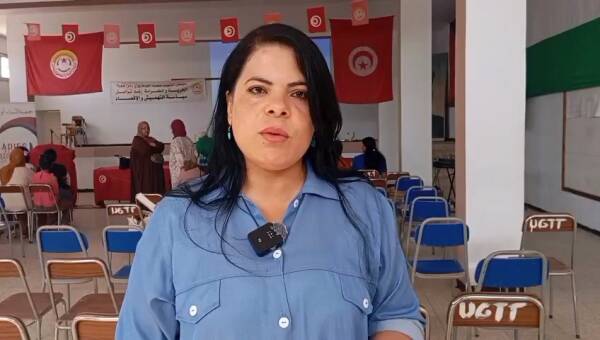
For her part, Jannat Bensalah from the "Hawa's Voice" Association stated that this seminar adopts a participatory approach between rights activists and rights defenders, to produce recommendations that will be activated at a later stage. She noted that the seminar's program is rich and includes several workshops, including one on occupational safety, security in workplaces, and safe transport for women workers.
She called for the need to find a new mechanism for transporting women working in the agricultural sector under safe conditions, considering that the most important point is to recognize women farmers as workers and to record their profession on identity cards instead of the phrase "household affairs."
Jannat Bensalah concluded her remarks by saying: "When we recognize her profession, we will then talk about her rights—from joining trade unions and occupational medicine, to social coverage and decent working conditions." She affirmed that this seminar represents a genuine opportunity to transform the suffering of thousands of women into a new reality based on dignity and justice.
Rich Program
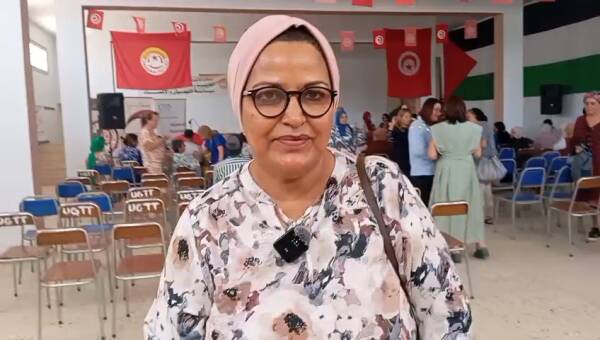
Because the seminar's topic is one of the thorny issues in Tunisia, the program included speeches from various participants, including a representative of the General Union of Labor in Sidi Bouzid and representatives of civil society. The seminar's proceedings also included inputs related to the rights of women workers in the agricultural sector, others related to transporting women workers in agriculture, and a third intervention focusing on the laws regulating this sector.
Parallel interventions organized workshops addressing the issues of rural transport, occupational safety, and social protection. The outcomes were presented, which primarily emphasized the necessity of recognizing the profession of women agricultural workers, organizing the sector from the level of the intermediary responsible for transport to the farmer, while providing the protective means, safe transport, and decent working conditions that women workers need, away from all forms of exploitation and harassment.
Other workshop outcomes included the necessity of involving women farmers in decisions and allocating privileges to them when formulating the country's public policies. Participants also agreed on the importance of women having a role in society in general and rural society in particular, as the pillar of the home and the guarantor of activating the agricultural sector and ensuring food security. Based on this importance, they called for the activation of protective laws and the defense of their rights.