
Lebanon… Dialogue on Renewing the Social Contract
The “Warriors for Peace” association highlighted Lebanon’s sectarian system crisis and proposed alternatives based on citizenship, equality, and transparency, drawing on participatory democratic experiences from the region
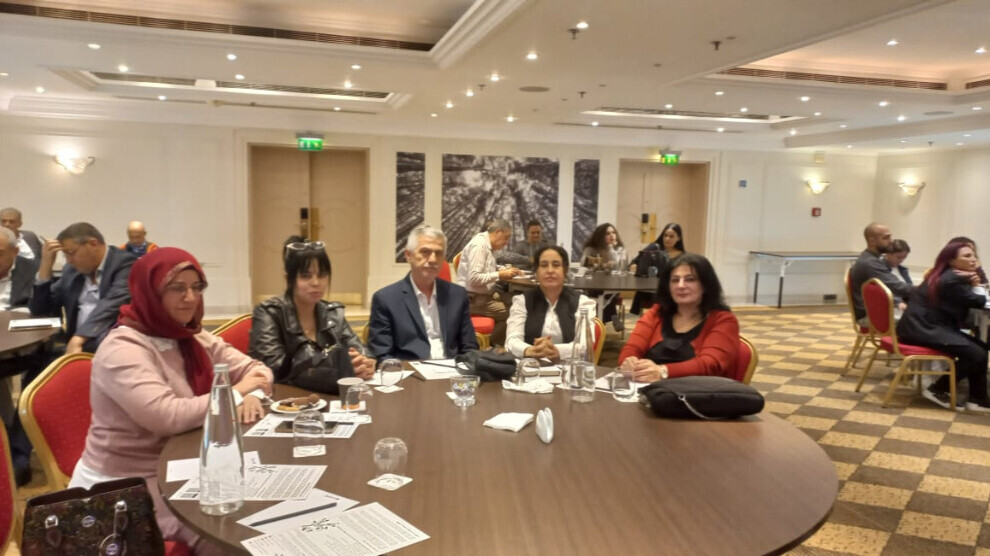
Beirut — Hanan Othman, head of the Women’s Committee, emphasized during a panel discussion the need to move beyond the sectarian quota-based system toward a new social contract based on citizenship, equality, and transparency in Lebanon. She cited the experience of self-administration in Northeast Syria as a participatory democratic model from which lessons could be drawn.
The “Warriors for Peace” Association organized the panel on Friday, December 5, under the title “Towards Renewing the Social Contract in Lebanon: Opportunities and Challenges”. The event brought together researchers, activists, and experts in social and political affairs, along with several Lebanese MPs who joined the discussion.
Representing the Norouz Association, Hanan Othman delivered a speech on behalf of the delegation, receiving positive reactions from the audience. She noted that Lebanon’s current crisis exposes the fragility of the social contract based on sectarian balances and quotas, stressing the need for a model that enshrines citizenship, equality, and transparency.
Othman compared the Lebanese situation with the self-administration experience in Northeast Syria, which relies on participatory democracy, equality, and the expansion of local community roles in decision-making. She argued that this model provides important lessons applicable to rebuilding Lebanon’s social contract, particularly regarding public participation, separation of powers, and accountability.
In concluding her intervention, Hanan Othman posed a question to the panelists about practical steps to establish a new social contract in Lebanon—one that is more just, inclusive, and protective of all citizens’ rights, free from sectarian alignments