
Leader Öcalan Calls for Adopting Democratic Policies as an Alternative to Nation-State Solutions
Leader Abdullah Öcalan told Turin's Democratic Confederalism Conference that adopting democratic policies and a new covenant guaranteeing free coexistence and equality is the inevitable alternative to war and nation-state policies.
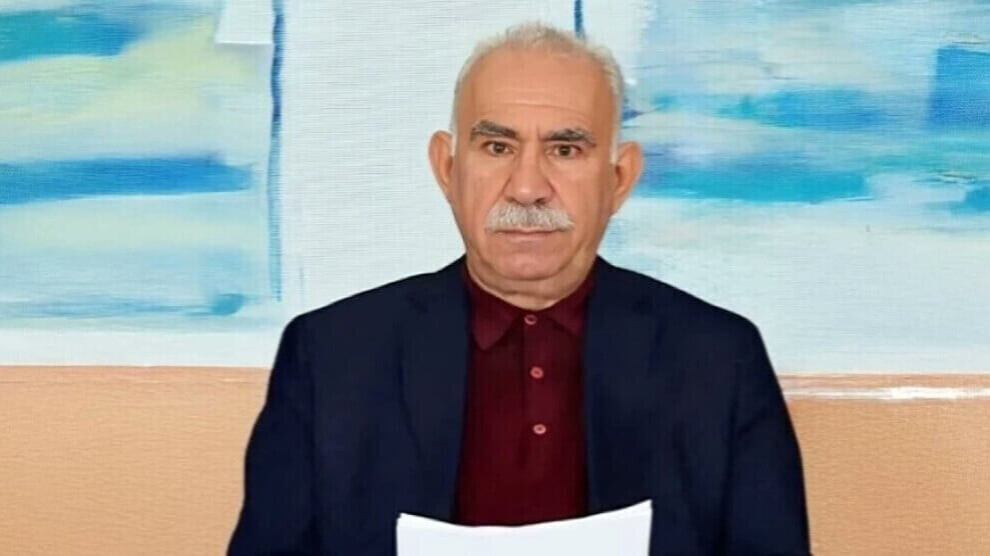
NEWS CENTER- Leader Abdullah Öcalan affirmed in a message that ending the armed struggle represents the beginning of a new era, stressing the necessity of eliminating the root causes of the conflict, addressing the roots of the conflict, and guaranteeing the cultural and legal rights of the Kurds to achieve a lasting and comprehensive peace in the region.
Leader Abdullah Öcalan sent today, Saturday, 17 October, a message to the Democratic Confederalism Conference held in the Italian city of Turin, in which he said: "Dear friends, I greet you from İmralı with feelings of international solidarity and freedom. I hope that your conference will contribute to achieving equality and freedom among peoples, and to establishing a lasting peace in the Middle East.
The Middle East is passing through a critical phase. Wars, conflicts, nation-state solutions, and security policies have not brought peace and freedom to peoples, and this has become clear. Therefore, our fundamental task is to reject the policies of war and adopt democratic policies, organize society, and build a new covenant that guarantees free and equal coexistence among peoples. The democratic confederal system and the vision of the democratic republic are among the most important topics discussed in this endeavor.
The dissolution of the Kurdistan Workers' Party and the end of its strategy in armed struggle should be viewed as the beginning of a new era. This change also requires a new perspective on the issue. To clarify, ending the armed struggle alone does not mean peace. For peace to be lasting in the end, the root causes of the conflict must be eliminated, the existence of the Kurds, their language and culture must be guaranteed, the obstacles impeding the path of democracy must be removed, and equality in citizenship must be guaranteed legally.
Democratic integration does not represent unilateral assimilation or unconditional participation in the existing system. On the contrary, it must be a democratic transformation in which difference is not denied, rights are recognized, and coexistence is established on the basis of equality. What is equivalent to democratic politics is the democratic republic, and the rule of law is the fundamental guarantee of a democratic society. Without legal guarantees, democratic politics cannot continue, the peace process cannot succeed, and the resolution of the Kurdish issue cannot be viewed in isolation from the democratization of Turkey. Likewise, the democratization of Turkey is inseparable from the emergence of a political will that guarantees free and equal coexistence among peoples.
Here lies the importance of the perspective of democratic confederalism in the Middle East. The solution is not in merging peoples under one identity, or turning borders and differences into sources of new conflicts, or creating a new form of state domination. What we need today is: democratic politics instead of the politics of war, recognition instead of denial, law instead of coercion, and free and equal coexistence instead of social fragmentation. This transformation requires states and political actors to bear responsibility, strengthen democratic institutions, and give society the opportunity to participate in decision-making about its future.
Dear friends, I hope that this conference will discuss the perspective of democratic confederalism under the current circumstances, and reveal practical paths toward a democratic solution. The future of the Middle East does not lie in new wars and new relations of domination, but in building a democratic society. Liberation lies in the free unity of peoples and the strengthening of democratic political action. Politics must replace weapons, law must replace insecurity, and equality must replace denial. This is the path to lasting peace."