
Kurdish Women Journalists’ Day… The Heirs of Gurbeteli Ersöz Continue Writing for the Truth
Journalist Ozgur Deger says Gurbetelli Ersöz legacy became a traditon Kurdish female jounalists carry with their pens, affirming that Ersöz’s heirs will keep confronting the repressive mentality.
ARJIN DILEK ÜNCEL
AMED_From the pages of magazines and newspapers to news agencies and television channels, Kurdish female journalists have accumulated a special medica experience, while simultaneously waging a confrontation with the denial of Kurdish identity, masculine and feudal mentality, gender-based discrimination, and forms of repression that have affected the press and freedom of expression.
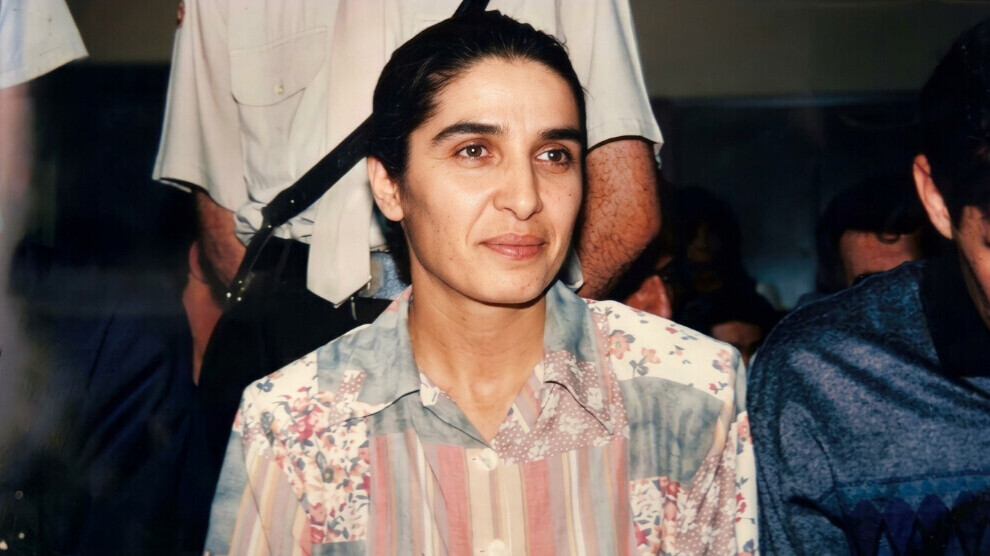
At the heart of this path, the experience of Gurbetelli Ersöz emerged. She did not content herself with breaking barriers to women's presence in the media, but contributed to establishing a different concept of journalism, in which women are owners of decision, voice, and will, and in which writing turns into a tool for pursuing truth and resisting repression.
Today, decades after her passing, Kurdish female journalists continue to carry this legacy, persisting in writing, documentation, and journalistic work despite risks and pressures. Journalist Ozgur Deger says that Gurbetelli Ersöz gave the tradition of journalism a new spirit, confirming: "Those who will rebel against this repressive mentality will be us, the Kurdish female journalists, the heirs of Gurbetelli Ersöz."
A Media Journey Made by Women
Kurdish female journalists, who carried the legacy of Gurbetelli Ersöz and contributed to free journalism, formed a fundamental part of the struggle against discrimination, militarization, and oppression. At the same time, they established a media tradition that gave women an active position in news production and the formulation of media discourse.
This journey was not confined to northern Kurdistan; women used the pen, camera, and voice across the various Kurdish geographies, transcending political and geographical borders. In this context, the first women's magazine of the Kurdish women's movement began under the name (Jina Serbilind), which was published in Europe in 1993.
In 1997, the first women's newspaper was published under the name "Free Life" (Jiyana Azad), weekly in the Kurdistan Region. In northern Kurdistan, the magazine "Free Woman" (Özgür Kadın) began publication in 1998, before continuing its journey later under different names.
With the entry of the new millennium, Kurdish women continued to expand their presence in the media field. In 2005, (Newaya Jin) was published in Europe, and on 8 March 2012, the Women's News Agency (JINHA) began its work. In 2018, JIN TV was founded, then the Women's News Agency (NuJINHA) began its work in 2021, with the aim of being a voice for the women of the Middle East.
Kurdish female journalists commemorate the seventh of October as "Kurdish Women Journalists' Day," the date of the martyrdom of Gurbetelli Ersöz in 1997, whose experience turned into one of the most prominent symbols of this journalistic tradition.
On the occasion of Kurdish Women Journalists' Day, journalist Ozgur Deger recalled Gurbetelli Ersöz, noting that the seventh of October is not merely a date on the calendar for Kurdish female journalists, but a date that carries within it resistance, struggle, and truth, and represents the beginning of a path of journalistic resistance.
"She Established a Women's Language in the Face of an Increasingly Masculine Media"
Ozgur Deger notes that Gurbetelli Ersöz, who assumed the position of editor-in-chief of the newspaper Özgür Gündem in 1993, was not just a journalist who took a leadership position, but was part of a broader transformation in the concept of women and their role within the media. "At a time when media worldwide was becoming increasingly masculine, Gurbetelli Ersöz appeared as a light in the heart of this historical reality. In the face of masculine hegemony, she established in the media the language of women, their existence, and fundamentally their will."
She added: "When we look at the world at that time, we will see that it was not easy for a woman to assume a leadership position in the media. But Gurbetelli Ersöz showed this will in Turkey and Kurdistan, and wrote history as the first woman to assume the position of editor-in-chief in Turkey. Therefore, reducing the legacy of Gurbetelli Ersöz to Kurdish journalism alone would be an incomplete assessment."
"Kurdish Women's Journalism That Made Its Voice Heard to the World"
Ozgur Deger believes that what Gurbetelli Ersöz began in 1993 did not stop with her passing, but turned into a path continued by generations of female journalists. "This spirit of resistance, this expression of will, and this rebellion that appeared in 1993, continues today and expands under the conditions of the twenty-first century. The presence of female journalists in management positions, and their possession of the word and the will, is in part a result of the values that Gurbetelli Ersöz established."
She noted that it is "important for us to preserve the legacy of struggle and resistance that she created, and to add new values to what she left. We should look at the pen we carry as a tool of power; every news item we write, every word we say, every image we capture and document, and every scene we record, is an extension of the path that Gurbetelli Ersöz opened."
She cites journalist Jiyan Belkin, who was following developments in northern and eastern Syria, saying: "Jiyan's presence there is the most concrete example of the value of women's journalism that Gurbetelli Ersöz created."
"They Are Afraid of the Power of Female Journalists"
Speaking about the price that female journalists paid during this path, Ozgur Deger pauses at the targeting of journalist Nakihan Akarsal in Sulaymaniyah. "The fear that stands behind the assassination of Nakihan is the fear of the masculine mentality, the dominant mentalities, and the states, authorities, and forces that build their existence on a system of exploitation."
She added: "The legacy that Gurbetelli Ersöz left and the values she established constitute an intellectual confrontation with the owners of masculine hegemony. This legacy rebels against a mentality that cannot eliminate women's identity, but tries to subjugate it. When it fails to do so, it resorts to killing, arrest, and subjecting women to various mechanisms of repression."
From Solidarity to Expanding the Circle of Resistance
Ozgur Deger does not separate journalistic work from organization and solidarity. She believes that the continuation of the press in performing its role requires building a solidarity network that transcends borders and geography. "If a chain of solidarity is to be built, it must be woven at the global level, by expanding this legacy. The totality of values that Gurbetelli created must be conveyed to the world and disseminated, and everyone must be made part of the legacy of this struggle and this tradition of resistance."
She explained that "since the 1990s, we, the Kurdish press, and especially Kurdish female journalists, were the most exposed to pressures. When we look today at Turkey or the Middle East, we see that everyone who raises their voice in objection has become under a chain of pressures."
She noted that "the persons and institutions that did not show solidarity with us that day have today themselves become faced with pressures. We know that solidarity for us is a culture, tradition, and legacy we received. Gurbetelli always taught us to resist injustice and to scream with the truth, even if that was at the expense of our lives. Therefore, since we belong to this tradition, we say that developing and expanding solidarity requires gathering everyone who is subjected to repression under one umbrella."
At the end of her interview, Ozgur Deger linked press freedom, freedom of expression, and society's right to access information, confirming that solidarity remains one of the fundamental tools in facing pressures. "If women are the ones capable of changing life and transforming it, then those who will rebel against this repressive mentality will also be us, the Kurdish female journalists, the heirs of Gurbetelli Ersöz."