
Kobani… The Siege Continues Amid Calls for Safe Return
Kobani is enduring harsh conditions as a suffocating siege imposed by the Syrian Interim Government continues, despite the announcement of the implementation of an agreement to lift the blockade, amid international and UN neglect.
SILVA AL-IBRAHIM
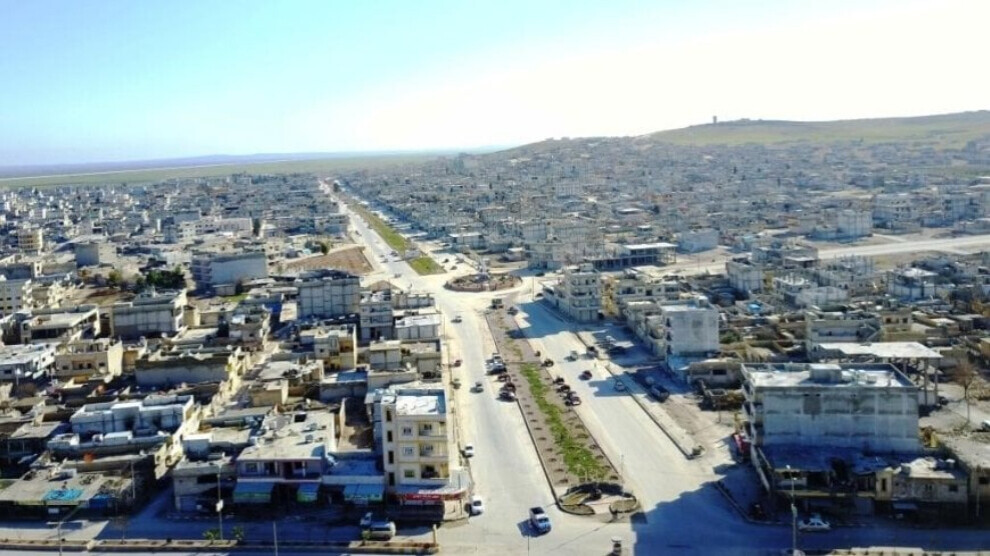
Kobani – The city of Kobani is facing a crippling siege while receiving thousands of displaced people fleeing attacks by jihadists from Hay’at Tahrir al-Sham, further exacerbating the suffering of both residents and displaced families. Despite agreements aimed at lifting the siege, the city continues to endure severe humanitarian conditions, amid local appeals and calls for a safe return that ensures the dignity of the displaced and social stability.
Although an agreement was reached between the Syrian Democratic Forces and the Interim Government stipulating the lifting of the siege on Kobani, the blockade has remained in place since January 18.
Regarding the continuation of the siege and the lack of security, the Co-Chair of the Social Affairs and Workers Authority in the Euphrates Canton, Falak Yousef, stated that “the recent attacks on the city of Kobani and its countryside have had serious humanitarian repercussions, including waves of displacement caused by the attacks, whether from the rural areas of Kobani or from the cities of Raqqa and Tabqa, which previously hosted displaced people from Tel Abyad and Afrin in Tel Al-Saman and Tabqa camps.”
She pointed out that all these displaced people headed to Kobani, numbering in the hundreds of thousands, at a time when the city itself is under a suffocating siege marked by the disruption of electricity, water, food supplies, medicines, infant formula, internet services, fuel, and other basic necessities. This has led to a humanitarian catastrophe in the city and intensified the suffering of children and women in particular, with a rise in disease rates among them.
She added that “the siege and displacement wave coincided with a drop in temperatures and heavy rainfall and snowfall, which further worsened the situation of both displaced people and residents.” She continued, “The displaced were sheltered in schools, mosques, churches, kindergartens, and academies. We did everything we could to accommodate them, but it was not enough. Even the residents of Kobani opened their homes, with each household sheltering no fewer than four families.” She emphasized that “with the limited and scarce resources available, we tried to provide assistance to the displaced.”
Displaced People Face the Siege with Solidarity and Resilience
Falak Yousef also addressed the assistance provided by the Kurdish Red Crescent, the Red Cross, and some organizations, noting that “this aid was insufficient and did not cover the number of displaced people present in the city.” She stressed that “such assistance does not ease the burden on the displaced. The best solution to this catastrophe is lifting the siege on the city and restoring commercial activity, in addition to returning the displaced to their homes—such as those from Raqqa and Tabqa. Ultimately, they are all Syrians who have the right to a safe return and to live with dignity on their land.” She added that “after the January 30 agreement, the siege was supposed to be lifted, yet it remains in place to this day.”
In conclusion, Falak Yousef praised the resilience of the people of Kobani, saying: “Despite the difficult conditions the residents are living under, they have not hesitated to resist these hardships and to support one another, extending a helping hand to the displaced who sought refuge in Kobani. This demonstrates the strong solidarity between the people and the administration—not only in times of joy, but also in times of hardship. We are confident that we will be able to overcome this ordeal through unity and collective effort.”