
Khalat Khaled Dalir… A Kurdish Artist Recalling Stations of Her Career
Artist Khalat Khaled Dalir began singing in childhood, leaving a mark on Kurdish art with her authentic voice despite early political restrictions. This reviews her career’s key stations and famous songs.
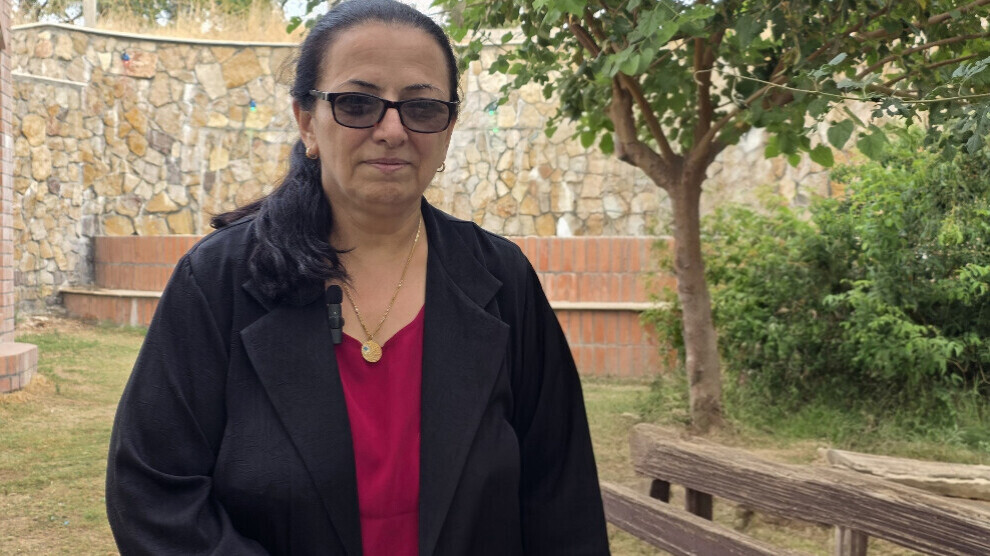
SHLER KOYI
KOYA_Art in the history of the Kurdish people has remained a truthful voice for expressing pain, love, and resistance, and has maintained its presence as part of Kurdish memory and identity.
Among the names that left their mark on the journey of Kurdish art and folk singing, the artist Khalat Khaled Dalir stands out. She began her artistic career at a highly sensitive stage, and was able, with her sweet and authentic voice, to reserve for herself a distinguished place in the memory of Kurdish art.
From an Artistic Family to the World of Singing
Khalat Khaled Dalir grew up in the embrace of an artistic and literary family, and her father had the most prominent role in discovering her talent and encouraging her since her childhood. Her father was a composer, poet, and literary figure, in addition to possessing a beautiful voice, and he saw in his daughter a talent deserving of care and development.
Thanks to his continuous support and encouragement, Khalat Dalir found herself from her earliest years walking the path of art, until she began her singing career at the age of eight. The subsequent years became an important station in her career, especially during the 1980s, when she presented several works that were added to the archive of Kurdish art.
Art in the Face of Political Restrictions
Khalat Khaled Dalir explained that her artistic journey was not easy, as her beginnings coincided with a turbulent political and social phase under the rule of the former Iraqi regime, where Kurdish artistic works were subject to censorship and restrictions, and it was not easy to record or broadcast songs freely.
Among the most prominent stations in her career is the story of the song "Bahar Bahar," which was the first song with which her name was associated in her artistic beginnings, before it faced a ban by the Baath government due to its content and the background of its lyrics.
Khalat Khaled Dalir says that she wanted to record the song with Professor Anwar Qaradaghi, but the government of that time did not approve its recording. She noted that one of the reasons for banning the song was related to the fact that her father was the one who wrote its lyrics, in addition to the authorities realizing that the poem was not talking about spring in the direct sense.
She noted that in the early 1980s, during the Iraq-Iran war, she was able to record the song with the "Orphans' Children" band, and the song was broadcast via Kirkuk TV.
"I Sang Songs on the Stage"
Khalat Khaled Dalir explained that in the late 1980s, the song "Ay Qamari" was prepared with the Kirkuk band. "My father and Shawkat Rashid were in the chorus, and we recorded the song 'Ay Qamari' for Akreman. I also have two other songs, one with the Orphans' Children band, and the other I presented on stage. I participated several times in the Taher Tawfiq Festival. I do not know if some people recorded them or not, but I have not seen a recording of them. I used to perform on stage only the song 'We live heading toward peace, we live heading toward freedom.'"
"We Have Good and Talented Singers"
About the reasons for her stopping singing, Khalat Khaled Dalir said: "In the 1990s, in 1992 and 1993, everyone was singing, and conditions were normal. Everything found its place in the field of art. Therefore, I left singing and no longer sang. We have good singers, and they are very talented."
At the end of her talk about the song "Qamari," which is said to have been sung for her mother, Khalat Khaled Dalir said: "It is true that my mother's name was Qamari, but this song was written by my father in 1958. My father wrote it about the turtledove bird."