
Journalist: The Truth Must Be Told and Professional Ethics Are Non-Negotiable
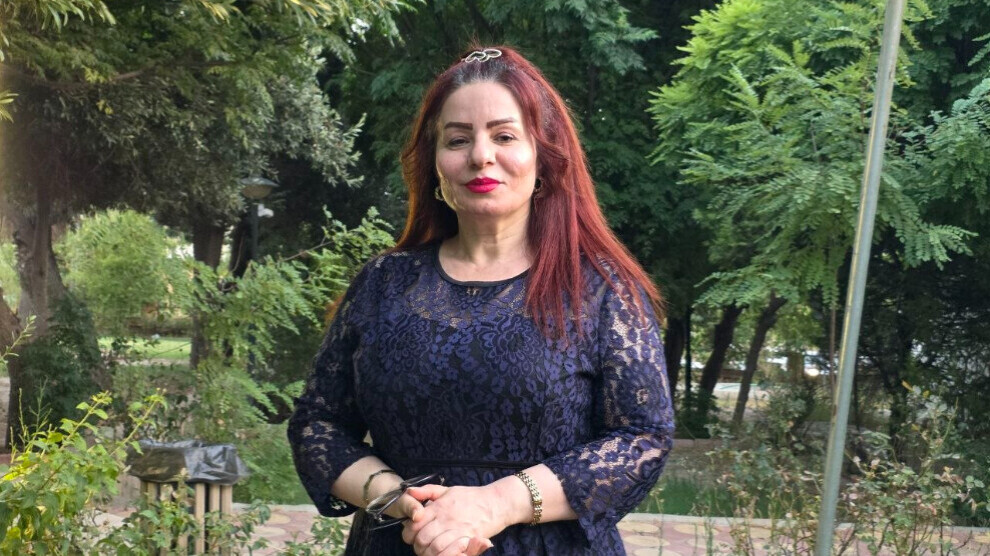
Journalist Sozan Hama Said affirms that journalism is measured not by frequency of appearances but by truth-telling and ethical commitment, with technology changing tools but not the need for experience and honesty.
SHELIR KOYI
Koya — In a world where the speed of technology and social media weaken the authenticity of media work, the voices of experienced and pioneering women continue to serve as beacons illuminating the path.
Sozan Hama Said is one of the well-known media figures in the city of Koya, Kurdistan Region. She has a professional career approaching three decades, during which she has moved between television, radio, and multiple media platforms, accumulating a rich professional experience that has made her a witness to media transformations and the evolution of its tools.
In her interview with our agency, she reviewed the most prominent milestones of her professional career, the challenges she faced during her years of work, along with her vision for women's position in the media field and the differences between the media of yesterday and today. She affirmed that development in work tools should not come at the expense of the professional and ethical principles that form the foundation of the media message.
Sozan Hama Said's beginnings date back to her childhood, when she entered the world of media in 1995 through the Kurdish People's Television in Sulaymaniyah, working as a presenter of children's programs. Simultaneously, she participated in children's artistic groups and performed as a presenter and actress in theatrical and operatic works, allowing her from an early age to gain experience in standing before audiences and working within artistic teams.
After moving to the city of Koya, she continued her career at Koya Television as a program presenter, participating in preparing and presenting a variety of programs in cooperation with the channel's staff. She later moved to radio work, presenting programs on Mash'alan Radio, thus expanding her media experience and combining work in front of the camera and behind the microphone.
Sozan Hama Said also worked as a master of ceremonies and presenter on the theater stage. "Over the past 30 years, I have participated in many seminars and conferences in Koya, and I am still continuing my work at Kurdish People's Radio and Mash'alan Radio. I have a live program, and I also worked as a writer, having a special column in a number of magazines and newspapers."
"Media Used to Have a Special Beauty"
Sozan Hama Said says: "Media is a different world; it gives you a lot. It opened doors for me that were not open before. I was able to learn from others' experiences, meet remarkable people, learn different perspectives, and learn about many things within society through the problems and social issues that need to be addressed."
She added: "Love and passion were the reasons for my continuation. The journalism profession is beautiful; it keeps you always in a state of renewal and following events, makes you an alert person, and pushes you to think in a different way. Love and passion make you continue."
She believes that a successful journalist is one who remains honest regardless of the influences and pressures they face, and that "they should convey the truth to people, remain neutral, and not hide a topic or fact for any party or person. A journalist must not lose their honesty."
Regarding the changes that have occurred in media between past and present, she said: "Previously, the number of journalists and media institutions could be counted on one hand. In that period, a number of experienced journalists emerged. Technology did not exist then, but media had a special beauty."
She added: "Today, technology has reached very advanced stages, but unfortunately, those beauties have begun to disappear. Social media has caused the decline of televisions and newspapers. At the same time, despite the abundance of institutions and journalists, experienced ones have become very few."
She explains that a large volume of work does not necessarily mean impact. "Sometimes there are people who have a lot of work and appear constantly, but their impact is not great. There may be a woman who has only two programs a month, yet she achieves good impact." She added that "in the institution where I worked, we had women with very great capabilities, yet more space was often given to men, even when the woman was more capable."
She believes this is also related to party orientations. "This also relates to the party's convictions, because every institution is linked to a specific party, and these parties affect their orientations. Therefore, women who enter the media field should first raise their cultural level, conduct good research and follow-up on their work. They should be good readers and constantly follow events."
She emphasizes the necessity of having courage. "A woman must have courage and not fear moving forward or society's criticism, because women are often subjected to societal pressures, and society looks at them differently. Therefore, a woman must have the ability to face obstacles."
She added: "In general, the journalism profession is beautiful, and thanks to my love for my work, I was able to overcome difficulties. With all this development present today, I wish these capabilities had been available at the beginning of our professional careers, so we could have produced better work and been more service to citizens. I have many wishes, but what makes me happy is that I have not done any work that I regret."
She noted her activity on social media regarding events and social issues. "I write about events and developments, and I have always tried to express my opinion and criticize matters, even when it concerns the institution or party I work with or agree with."
"The Truth Must Be Told"
She noted that in her recent posts, she sharply criticized the government regarding its decision not to appoint a number of university and institute graduates, before the government reversed its decision.
She believes the decision was a mockery of people's feelings and of a number of young people who were hoping to get an opportunity to work in their specializations and benefit from the degrees they had obtained.
Sozan Hama Said summarizes the essence of her experience by saying: "If I want to give a lesson to journalists, and to women especially, through all my years of work, I would say: In any work you do in the field of media, do not neglect the ethical side of the profession, and do not make your ethics and your society's ethics a victim of any material or moral interest. This way, a person can become successful."