
Iraqi Women and Decision-Making... A Community Dialogue Discussing the Enhancement of Women's Presence
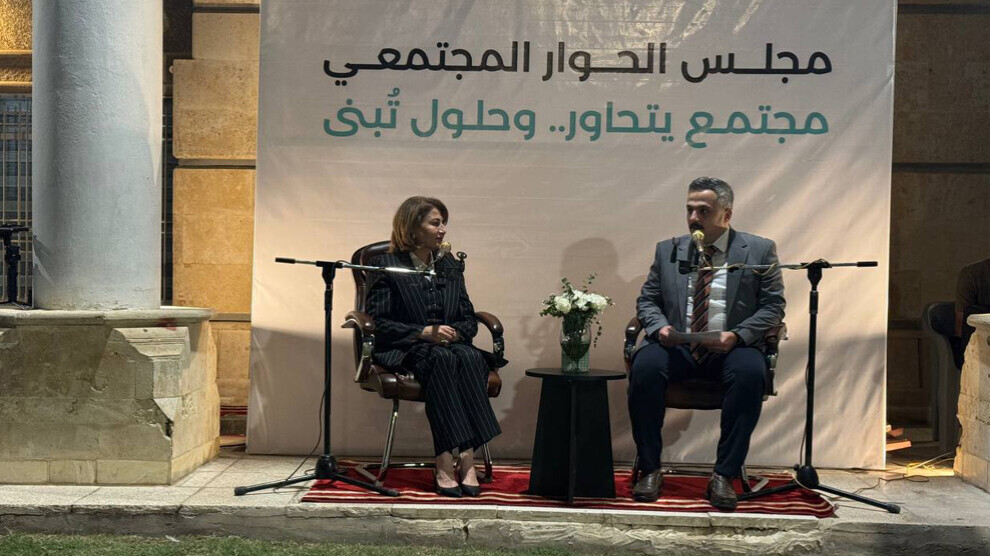
Baghdad's Community Dialogue Council Hosted Advisor Ala Talabani in a session with activists and academics, discussing Iraqi women's reality, decision-making role, and challenges to their presence in state institutions.
RAJAA HAMID RASHID
BAGHDAD– Participants in the dialogue session held in Baghdad reviewed the current challenges of the reality of women and children in Iraq, demanding the provision of shelters and appropriate rehabilitation centers for battered women, and the formation of a unified women's parliamentary team that adopts amending laws and legislation unfair to women.
In the presence of a number of activists, academics, and professors in various fields, the Community Dialogue Council held yesterday, Monday, the fifth of October, a dialogue session in Baghdad, during which it hosted the Advisor to the Prime Minister for Women's Affairs, Ala Talabani, in a direct dialogue addressing the reality of Iraqi women and their role in decision-making and public policies, alongside the most prominent challenges they face and ways to enhance their presence in state institutions and society.
In her speech during the dialogue session, Ala Talabani confirmed that women represent about 49 percent of Iraqi society, stressing that the cultural, social, and political marginalization of this half cannot continue. "Talk is still circulating in society about the necessity of women's presence as a minister, academic, activist in civil society, and present in various forums," confirming that this presence is not a favor, but represents the natural place of women and their entitlement.
The Quota and Parliamentary Representation
Ala Talabani addressed the efforts to approve the women's quota system, explaining that the demands initially tended toward adopting a rate of no less than 40 percent, but the meetings with members of the Governing Council ended with setting the rate at 25 percent. "The quota contributed to guaranteeing women's presence inside the House of Representatives. The nature of electoral competition, and the fact that the heads of political blocs are mostly men, were among the factors that limited women's nomination opportunities."
A Decline in Women's Presence
Ala Talabani noted a decline in women's presence during recent years, pointing to some laws unfair to them, in addition to the absence of a specialized committee for women's affairs within the House of Representatives. "The presence of about 85 women in the House of Representatives, if their efforts are unified and their positions coordinated, can contribute to achieving important steps in favor of women's issues, including demanding women's presence in the executive authority, leadership positions, and various state institutions."
She added that enhancing women's presence can contribute to reaching advanced stages in guaranteeing their constitutional, legal, legitimate, and human rights and entitlements. She explained that the presence of a percentage of women in the House of Representatives does not necessarily mean that women's issues receive sufficient attention, as the problem sometimes lies in the female representative not defending women's rights and issues as required.
She concluded her speech by emphasizing her continuation of work on the files of violence, harassment, electronic blackmail, and the information crimes law, alongside her visits to departments, institutions, and shelters, with the aim of preparing visions and raising them to the concerned authorities regarding mechanisms for addressing these files.
Interventions and Demands
During the session, a number of participants presented interventions addressing the most prominent challenges facing women and children, and ways to develop legislation and policies related to them. Investigation officer Shams Ahmed said that battered women face a problem in obtaining appropriate shelter places, noting that shelters do not receive adult women over 18 years old, and described the matter as representing a big problem requiring treatment.
For her part, academic and advisor in the House of Representatives Dr. Lama Al-Khazraji said that the number of female representatives in the House of Representatives is 84, drawing attention to the existence of 16 political blocs. "Each bloc nominating one woman to form a strong women's team that works on amending laws related to women, including some laws related to the Jaafari Code, alongside the possibility of adopting the quota in executive and leadership centers."
For her part, women's rights activist and lawyer Shirin Zangana spoke about the child protection law, noting that it has been on the parliament's table since 2020, and demanded accelerating its legislation in a way that contributes to protecting children. She also addressed the Jaafari Code, expressing its negatives regarding some of the provisions it contained, considering that they affect the rights of women and children.