
Human Rights Organizations and UN Warn of Rising Execution Rates in Iran
Nine UN-affiliated organizations and 18 human rights groups warned in a joint statement of the escalating political executions in Iran, urging the international community to take immediate action to halt them and hold the Islamic Republic accountable .
News Center — Iranian authorities deliberately use execution to suppress opponents, amid growing reports confirming the judiciary's use of terror against critical voices instead of protecting justice. This approach exacerbates concerns over the future of freedoms and places a responsibility on the international community to monitor violations and prevent the transformation of capital punishment into a tool of political repression.
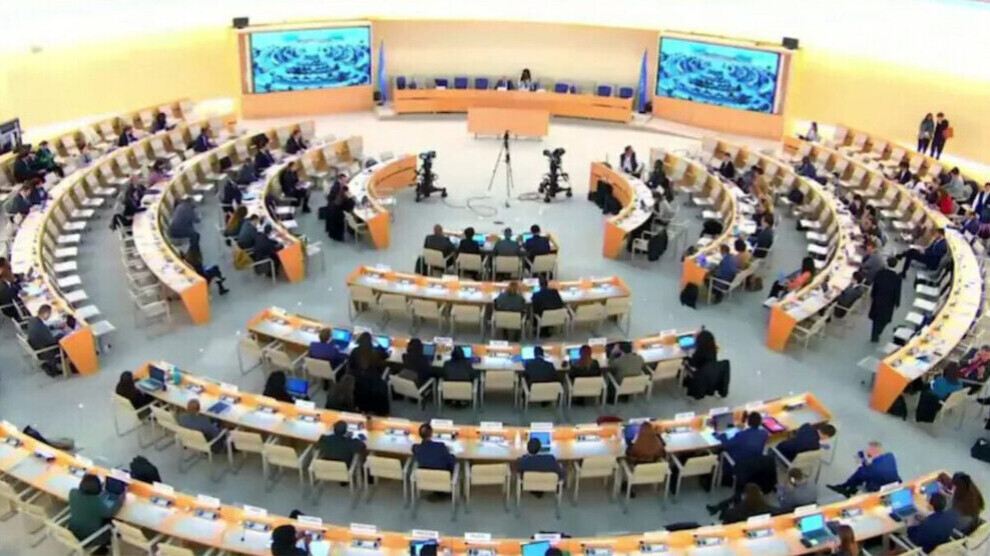
Concurrently with the 62nd session of the UN Human Rights Council, nine UN organizations alongside 18 human rights groups issued a joint statement warning of the escalating political executions in Iran and calling on the international community to take urgent steps to halt this trend and hold the Islamic Republic accountable for these violations .
The signatories noted that since the outbreak of widespread protests in the country earlier this year, Iran has witnessed a notable increase in the implementation of death sentences. According to the statement, this punishment is now being used more than ever as a tool to intimidate and suppress political opponents.
The statement indicated that the scale of executions in Iran is unprecedented since the mass executions of political prisoners in 1988. According to provided statistics, at least 2,167 people were executed in 2025, compared to 993 in 2024 .
Human rights organizations affirmed that the actual number of executions is likely higher than recorded figures due to a lack of transparency and the secret implementation of many sentences . They also noted that the time period between arrest, trial, and execution in many cases did not exceed a few weeks, constituting a flagrant violation of fair trial principles.
It noted that dozens of people were executed in cases of a political nature after trials described as "blatantly unfair," adding that eight prisoners accused of belonging to or cooperating with the People's Mujahedin Organization of Iran were executed. They warned that dozens of other political prisoners still face execution .
The statement considered that judicial procedures in cases leading to death sentences lack international standards, citing instances of torture, forced confessions, prolonged solitary confinement, beatings, and sham executions .
The signatories believe that death sentences in many political cases are not the result of an independent judicial process but are predetermined decisions of a political nature. They called on UN human rights organizations and special rapporteurs to prioritize the situation in Iran in their missions and take action to stop systematic executions .
They also called on Human Rights Council member states to immediately halt executions, release all detainees related to freedom of expression and protests, link diplomatic and economic relations with the Islamic Republic to improvements in the human rights situation, and consider referring Iran's case to the International Criminal Court .
The signatories affirmed that the international community's silence and inaction in the face of the execution wave will only lead to the continuation of impunity and the continued use of the death penalty as a tool of political repression in Iran