
Health, Awareness, and Prevention… Axes of a Dialogue Session on Women’s Empowerment in Baghdad
Baghdad hosted a dialogue session, "From Health to Participation," during Pink October, where academics confirmed health awareness and early detection are fundamental pillars protecting women's "health capital."
RAJAA HAMID RASHID
BAGHDAD – Participants in the dialogue session held in Baghdad shed light on the importance of health awareness and breast cancer prevention, stressing that women's physical and psychological safety is the fundamental starting point for enhancing their political empowerment and effective societal participation.
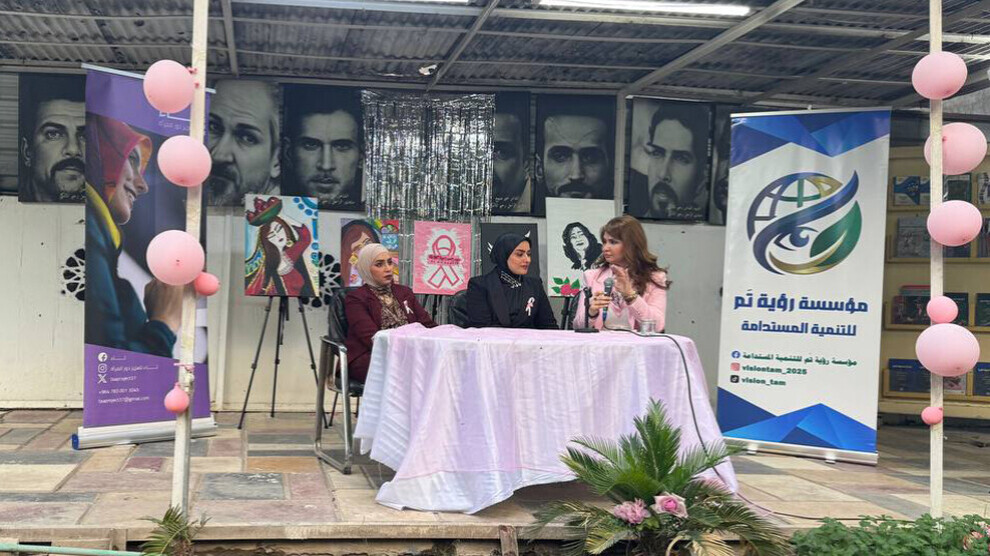
Academic participants confirmed the importance of enhancing women's health awareness and disease prevention, as two fundamental pillars for political empowerment and societal participation, during a dialogue session held simultaneously with the activities of the Pink October Festival, at the House of Allama Abdul Sahib Al-Mukhtar for Culture, Arts, and Heritage in Baghdad.
The festival was organized by the Cultural House of Allama "Abdul Sahib Al-Mukhtar" for Culture and Arts, in cooperation with the Faili Cultural House, one of the formations of the Cultural Relations Department in the Ministry of Culture, Tourism, and Antiquities, the "Ru'ya Tam" Foundation for Sustainable Development, and the "Taa" Project for Enhancing Women's Role, under the slogan "From Health to Participation," presented by media professional Zainab Ibrahim, with the attendance of a number of activists, media professionals, and academics.
During the session, Dr. Zeina Munther Al-Qura Ghouli, president of the "We Help" charitable organization, spoke about the most prominent health challenges facing women, confirming the importance of early detection of breast cancer, gynecological and chronic diseases, and conducting periodic examinations, and the role of proper nutrition and physical activity in disease prevention. She stressed the necessity of correcting misconceptions and enhancing health awareness based on science, and empowering women to make sound health decisions that preserve their safety and quality of life.
Women's Health Is the Foundation of Empowerment and Participation
For her part, Dr. Tamara Kadhim Al-Asadi, president of the Ru'ya Tam Foundation for Sustainable Development, confirmed that academic women face multiple challenges as a result of the accumulation of professional, family, and research pressures, which affects their psychological and physical health.
She stressed the importance of early detection and healthcare, and supporting those with chronic diseases, calling on universities and institutions to provide a flexible and fair work environment that enhances women's health, empowerment, and the continuation of their academic and societal participation.
Political Empowerment
Dr. Shahd Al-Rubaie explained the importance of changing the stereotypical image that separates politics from women's health, confirming that political participation and decision-making require a health, physical, and psychological reserve that enables women to perform their roles effectively.
She concluded by emphasizing the necessity of supporting and backing women in parliament and various fields, and enhancing their political and societal participation, in a way that ensures consideration of their health and enables them to perform their roles effectively.
The Importance of Early Detection
On the sidelines of the seminar, the director of the Cultural House of Allama Abdul Sahib Al-Mukhtar, Suzan Kadhim Kashkoul, explained to our agency that this activity comes in celebration of women during Pink October, with the aim of enhancing awareness of the importance of breast cancer prevention. She added that the session represents a real message to women, meaning that health is the foundation of society. "Women represent a fundamental pillar in it, and preserving their health and well-being enables them to perform their role in leading society."