
From Self-Defense to the Official Framework… Shingal Before a New Phas
An Article by BERITAN HIYAM
Throughout its history, Shingal has lived through successive chapters of resistance and suffering, and has remained a witness to the tragedies and genocide campaigns known as the Firmans that the Yazidi people were subjected to. Despite the deep wounds and grave losses left by these events, the Yazidis adhered to their land, identity, and culture, and showed great determination to protect their existence and continue life.
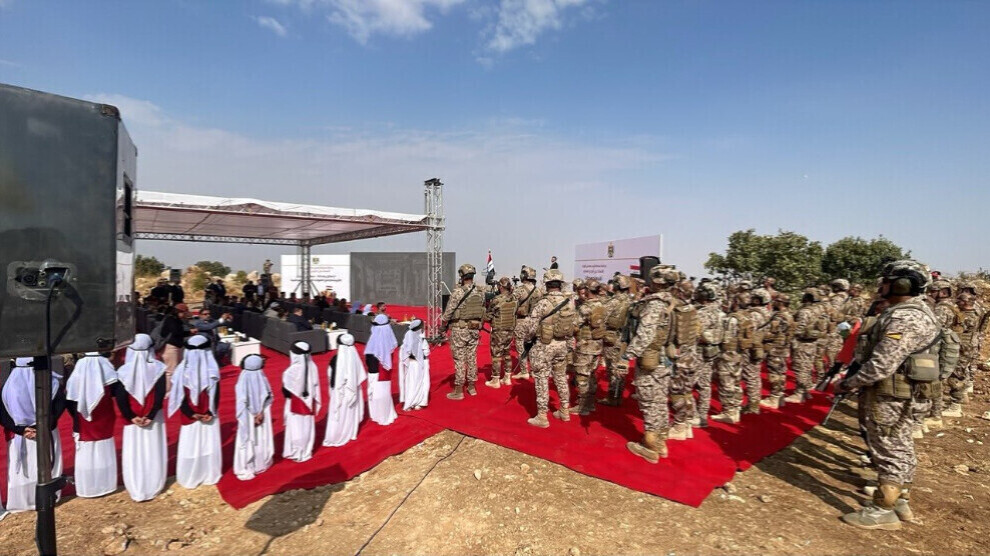
Today, Shingal stands before a pivotal phase that requires an integrated treatment of the security, political, and legal files, alongside responding to the humanitarian and social needs of its residents. In this context, the step of 26 October — the integration of the Shingal Resistance Units (YBŞ) and the Shingal Women's Units (YJŞ) into the Iraqi federal security system — has emerged as an important development that may open the door to a new phase in the region's reality and future.
The importance of this step is not limited to the military and security aspect only, but extends to the repercussions it may carry for political stability, the rights of local residents, and the future of the relationship between Shingal and Iraqi government institutions.
The Implications of the 26 October Step
Following the attacks that targeted the Yazidi people and the genocide campaigns they were subjected to, the need emerged to form local forces to protect and defend the population under the dangerous security conditions the region witnessed. At that stage, self-defense represented one of the fundamental means on which residents relied to confront threats and protect as much as possible of their lives and community.
Over time, the issue of organizing the security situation in Shingal within an official framework became one of the strongly raised issues, in light of the continuation of security and political challenges and the multiplicity of actors in the region. From this standpoint, the 26 October step can be viewed as an attempt to transition from an exceptional security reality to a more organized formula based on integrating local forces within state institutions.
This step carries implications that transcend the rearrangement of military structures; it reflects the possibility of adopting dialogue and understanding as a means to address some pending files and opening the field for arrangements that contribute to reducing tensions and enhancing stability. It can also constitute an opportunity to build a clearer relationship between official institutions and local forces, provided that this relationship is based on mutual respect, guaranteeing rights, and taking into account the specificity of Shingal and the needs of its residents.
However, the success of the integration process does not depend on administrative or military measures alone, but is linked to the extent of its ability to achieve actual security, enhance residents' confidence in official institutions, and ensure their participation in decisions that affect their lives and future.
Security Is Not Complete Without Justice and Fundamental Rights
Despite the importance of organizing the security situation as a step toward reducing tensions and entrenching stability, the Shingal experience shows that security cannot be reduced to the deployment of forces or control over the land. True security is also linked to achieving justice, addressing the effects of previous crimes, providing the necessities of a dignified life, and guaranteeing the fundamental rights of all residents.
For the integration process to achieve its goals and respond to the aspirations of the residents, it must be accompanied by practical steps in a number of main files. The fate of the kidnapped and missing must be revealed and justice achieved, as the issue of the Yazidis who were kidnapped or lost during the genocide attacks remains one of the most urgent issues for the families of the victims and the Yazidi community in general. Therefore, efforts should be intensified to reveal the fate of the missing, determine the locations of mass graves, provide the necessary support to the families of the victims, alongside pursuing those responsible for the crimes and holding them accountable in accordance with the law.
Alongside reconstruction and improving living conditions, restoring normal life in Shingal requires rehabilitating the infrastructure that was damaged or destroyed, and working to provide basic services, foremost among them water, electricity, healthcare, and education. Priority should also be given to the affected villages and neighborhoods in reconstruction plans, ensuring the provision of a suitable environment for the return and stability of residents.
In addition to ensuring the safe and dignified return of the displaced, a number of Shingal's people still live in displacement camps in the Kurdistan Region, in conditions that impose great living, psychological, and social challenges on them. Therefore, preparing the appropriate conditions for their return represents a fundamental responsibility that requires ensuring security, rehabilitating homes, providing services and job opportunities, and addressing the administrative and legal obstacles that prevent return.
Protecting Identity and Preserving Local Will
Shingal enters this phase carrying a deep historical, cultural, and religious legacy that makes preserving its identity and specificity essential in any project aimed at restoring stability to it. Language, belief, customs, and collective memory are not secondary elements, but constitute fundamental pillars for the continuation of the Yazidi community and the preservation of its existence.
Hence, the integration process that took place on 26 October should not be understood as an abandonment of the will of the people of Shingal or a marginalization of their role in managing the affairs of their region, but must be an opportunity to enhance their political, social, and cultural rights within the framework of the Iraqi state.
The Iraqi government also bears the responsibility of translating any understandings into tangible measures, and not settling for the security aspect at the expense of the rest of the files. The long-term stability of Shingal needs a comprehensive vision that combines security, justice, and development, provides residents with the reasons to remain and return, and rebuilds trust between the local community and state institutions.