
Feminist Meeting Discusses Empowering Iraqi Women and Enhancing Their Participation in Public Life
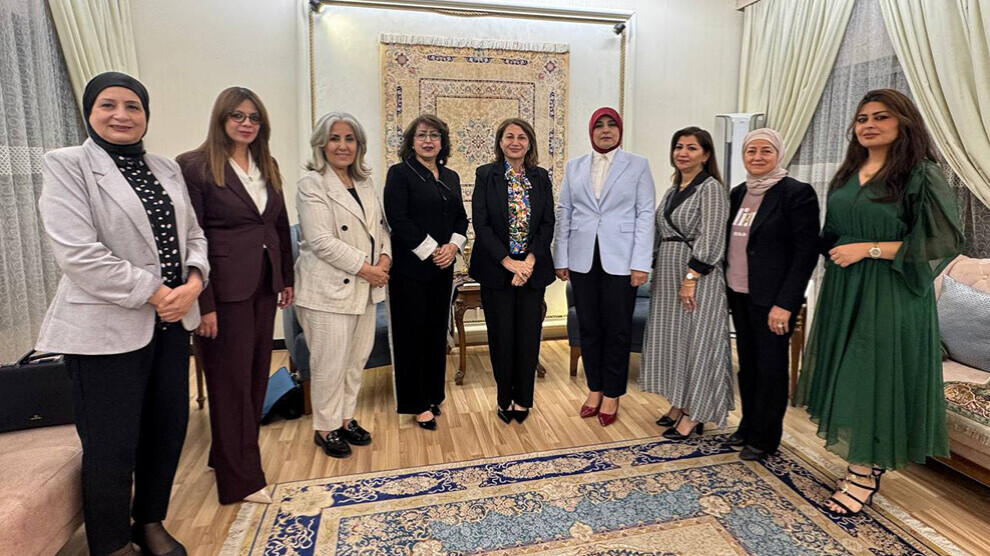
To discuss the challenges facing Iraqi women—foremost among them reducing violence, empowering women, and strengthening their role—a group of activists, academics, and journalists met with the Prime Minister's Advisor on Women's Affairs, Ala Talabani.
RAJA HAMID RASHID
Iraq — The participants in the meeting stressed the importance of addressing the challenges facing Iraqi women, foremost among them reducing violence, economically empowering women, and strengthening their role in environmental protection, while highlighting the need for effective partnerships to ensure the achievement of these goals.
A number of activists, academics, and journalists met yesterday, Thursday, September 3, with the Prime Minister's Advisor on Women's Affairs, Ala Talabani, to address the most prominent issues and challenges facing Iraqi women, and ways to strengthen their role and empowerment in various fields.
The meeting saw the presentation of a number of ideas, projects, and proposals related to reducing violence against women, harassment, and cyber blackmail, along with economically empowering women, protecting the environment and addressing the effects of climate change, as well as supporting civil society organizations, strengthening the role of women in media, and discussing the conditions of women from the various components of the Iraqi people.
The Prime Minister's Advisor on Women's Affairs also listened to a number of projects and initiatives presented by the participants, which aim to contribute to changing the Iraqi reality and supporting development and stability. She affirmed her commitment to supporting and empowering women in various fields and at all levels, whether in Baghdad or other cities.
Reducing Violence Against Women
Ala Talabani also addressed the details of her work, affirming that the file of reducing violence against Iraqi women is among the priorities of the Advisor's Office for Women's Affairs in the Prime Minister's Office, and receives wide attention, in line with Article 13 of the ministerial curriculum, which emphasizes protecting women from violence and preserving their dignity.
She stressed that work to confront the exacerbation of harassment has already begun, through steps including addressing this file in the public and private sectors, in addition to what happens in the street. She affirmed that efforts are being made to protect women and girls through awareness and protection measures, and reporting and follow‑up mechanisms to limit its spread. "We are also working on laws by reviewing unjust laws against women that violate their rights, because this is the guarantee for protecting women. Rights are established through the existence of sound laws that protect them from many phenomena, including violence."
She explained that building a democratic state requires a healthy and empowered civil society capable of playing an active role in political, social, economic, and other issues. Regarding the women's file, she referred to her experience in this field, stressing the need for strong civil society organizations that contribute to supporting women, lifting injustice from them, enhancing education and awareness, and addressing various social phenomena, including reducing violence.
She stressed that women's work is not complete without the partnership of civil society, explaining that any issue being worked on requires cooperation with think tanks and media, as no achievement appears unless the media highlights it. She noted that strong women in media need care, support, and protection: "Efforts will continue to ensure the protection and empowerment of distinguished women in media to perform their role."
Feminist Competencies as a Cornerstone for Changing Iraq's Reality
For her part, activist Ansam Qader affirmed through her participation in the session that the meeting emphasized the need to find solutions to issues of domestic violence, harassment, cyber blackmail, and exploitation of women, in addition to addressing the loss of many girls' futures due to weak legislation and the inadequate performance of some figures who have taken charge of the women's file.
Intisar Jabbar presented her project on "Migrating Trees" and replanting them in Iraq, reviewing the challenges she overcame with determination and perseverance, despite presenting the project to relevant authorities, including the Ministry of Environment. She stressed her need for more support to achieve her goal of reaching a green Iraq that revives vegetation cover and limits the effects of climate change.
Empowering Minority Women
Regarding minorities, activist Ikhlas Kamil Behnam explained that Christian, Yazidi, Sabaean, and other women from Iraqi society's components suffer from neglect and injustice. Speaking as a Christian woman, she said that women are the foundation of family stability and growth, and that preserving Iraqi diversity requires attention to all components without discrimination.
She stressed that economically empowering women or empowering youth in these families contributes to their stability within their areas and limits emigration abroad, thereby strengthening the presence of these components and preserving their role in society.
She explained that the Nineveh Plain has religious, historical, and demographic specificity that requires its preservation and the prevention of any infringement on Christians' rights and the future of their areas. She stressed that economic development and investments in these areas will contribute to the stability and survival of families, enabling them to manage their affairs security‑wise, administratively, politically, and economically.
She noted that instructions had been issued to compensate for the job grades of the Christian component, but those who retire or are referred to service due to illness or otherwise are not replaced by a young Christian holding university degrees and scientific qualifications, nor are senior state positions granted to members of this component, limiting their active participation in managing state institutions.
She also addressed the Personal Status Law No. 188, explaining that Christians do not have specific legislation regulating their personal status, as it is limited to marriage and divorce within the church with state ratification, while the rest of the details are subject to the provisions of general law. She stressed that Christianity is based on equality between the sexes in rights and duties, and that the legislation of the Shia codification has seriously affected the Christian family and other families belonging to other religions, necessitating a review and amendment of these legislations to align with the diversity of Iraqi society and preserve the rights of all its components.
Ala Talabani listened to the ideas and projects presented and expressed her commitment to supporting and empowering all women in all fields and at all levels, whether in Baghdad or the provinces.