
Escalating Closures and Accusations Renew Debate Over Public Oversight in Iran
Iran's escalating closures of businesses and cafes over hijab and "moral" violations spark renewed debate on state surveillance and social control in public spaces.
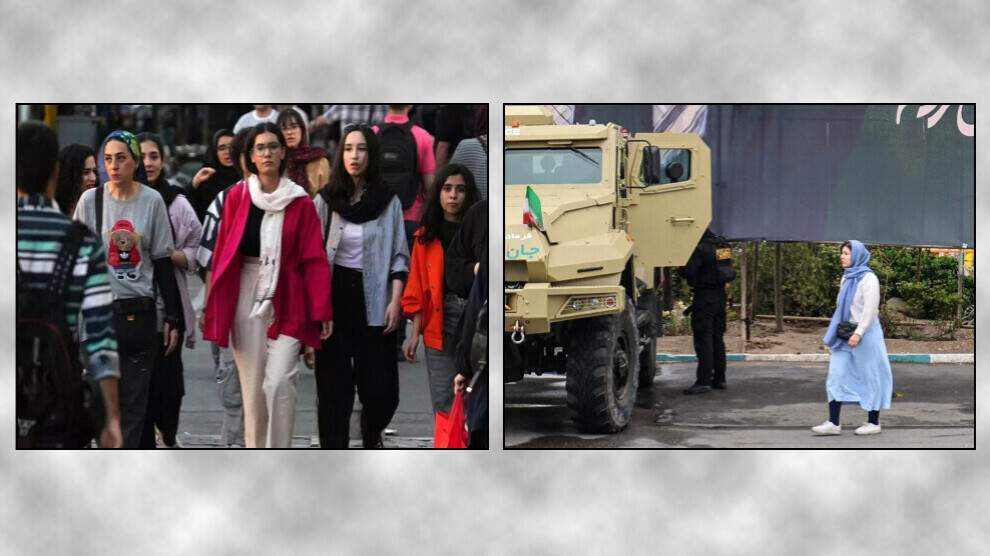
News Center— Iran has recently witnessed a notable tightening of surveillance on cafes and commercial establishments, with an expanding scope of closures and judicial measures under various pretexts, within the context of growing official control over both social and economic spheres.
While closures of cafes, restaurants, and other business units continue in various Iranian cities under pretexts such as "failure to observe Islamic decorum" and "violation of norms," the Chief Justice of Urmia Province announced the issuance of 14 indictments in cases related to "promoting prostitution and corruption."
The closures affected three cafes in Ardabil on the grounds of "non-compliance with Islamic decorum" and "violation of norms," with 16 individuals detained in connection with the incident. In Minoodasht, another cafe was closed on the pretext of "non-compliance with hijab." Closures also included three similarly named cafes in Mashhad, Bojnord, and Birjand, while a cafe and restaurant in Tehran were closed without an official explanation for the reasons.
According to published reports, at least 23 trade union units have been closed in various Iranian cities. The Director of Inspection and Oversight of Unions in Mashhad had previously announced the closure of 104 trade union units in the first four months of the current year—a figure he said is 20 times higher than the same period last year.
The Chief Justice of Urmia revealed the issuance of 14 indictments in cases related to "promoting prostitution and corruption," and stated that legal actions against "undisciplined behavior" in cafes are also ongoing.
This trend, alongside the crackdown campaign targeting workplaces, has reignited debate over the expansion of social surveillance using terms such as "uncovering the hidden," "violation of norms," and "corruption and prostitution." Critics argue that this approach is part of a broader policy to control and restrict public space—a policy that uses religious and moral concepts to provide grounds for legal actions, arrests, and business closures.
The closure of business units, given that a large part of the livelihoods of business owners and employees depends on the continuity of these establishments, not only restricts social freedoms but also imposes greater economic pressures on families. Human rights reports indicate an increase in judicial and security interventions in commercial and public activities related to mandatory hijab.