
Despite legislative progress... sexual and reproductive health services for women in Tunisia are "deficient"
The Touhida Al-Bekri group highlighted the gap between Tunisia's advanced sexual and reproductive rights laws and women's complex reality, citing geographical barriers, limited awareness, and pervasive patriarchy.
Tunisia – The coordinator of the Tahwida Bel Sheikh Group, Hajar Ben Nasser, confirmed that Tunisia possesses legislative gains that guaranteed women some distinguished rights compared to neighboring countries, such as the right to use contraception and safe abortion. However, the actual reality proves the existence of many obstacles preventing women's equal access to these services.
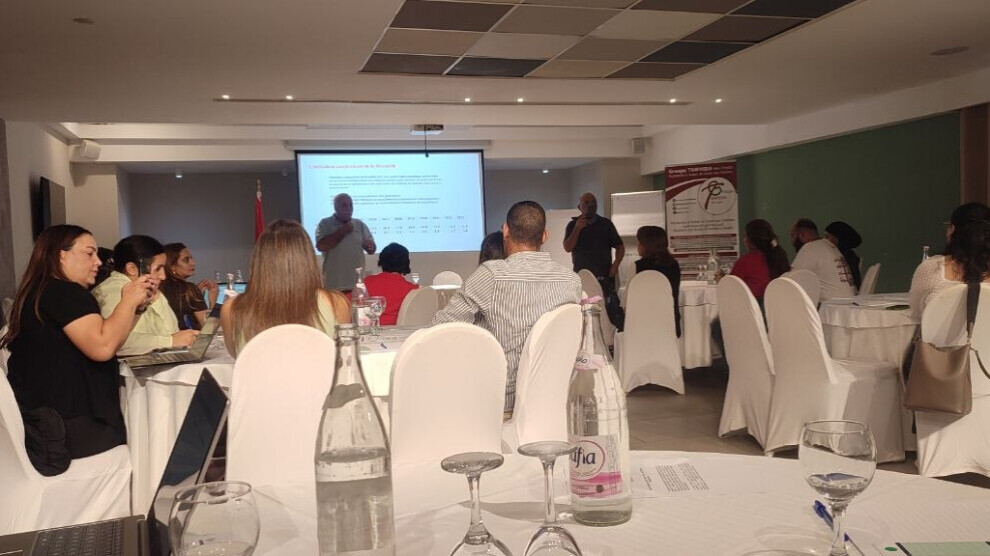
Simultaneously with the World Contraception Day and two days before the World Safe Abortion Day, the Tahwida Bel Sheikh Group organized a media meeting with a group of journalists to shed light on sexual and reproductive rights in Tunisia.
Although Article 43 of the Tunisian Constitution and local laws explicitly guarantee these rights, the participants in the meeting confirmed the existence of obstacles and social and behavioral structures that prevent their practice, as these laws collide with the patriarchal intellectual system and society's linking of these matters to the religious dimension.
The attendees stressed the great responsibility falling on the media in raising women's awareness and delivering accurate information to them, alongside its pivotal role in deconstructing and breaking the social stigma associated with these rights.
In a related context, the participants expressed their deep concern about the knowledge gap among young groups, as data indicate that a quarter of youth in Tunisia lack sufficient information about contraception, which is an alarming indicator that may have serious health repercussions and risks.
Since 1973, Tunisia has approved a law permitting safe abortion, enabling women to undergo this procedure in primary health centers and public hospitals free of charge and confidentially. However, civil society confirms that this right is not available to all Tunisian women, especially in the interior regions of the country.
Hadia Belhaj, president of the Tahwida Bel Sheikh Group, said that the sexual and reproductive health program is considered a pivotal pillar for social and economic development in Tunisia, and a fundamental component for practicing citizenship rights and accessing social services.
She explained that despite the difficult economic conditions the country is going through, the health budget has witnessed an increase, calling for the necessity that social and health policies take into account that access to family planning services and safe abortion represents a fundamental and strategic element for the future of Tunisia and youth.
Obstacles Preventing Access to Services
For her part, Hajar Ben Nasser, coordinator of the Tahwida Bel Sheikh Group, pointed out that Tunisia possesses legislative gains dating back a long period that guaranteed women important rights compared to neighboring countries, such as the right to use contraception and safe abortion.
She confirmed that all women should have enjoyed these rights equally, but reality proves the existence of many obstacles preventing actual access to sexual and reproductive health services, especially regarding contraception and abortion services.
She explained that the geographical dimension represents one of the most prominent of these obstacles, as women in rural areas in Tunisia are unable to move easily to reach medical service centers related to abortion and contraception, forcing them to travel longer distances that their capabilities may not bear, or circumstances may prevent them from leaving their homes in the first place.
She considered that the problem is compounded by the lack of information and the absence of awareness, pointing to a study conducted by the research group at the Tahwida Bel Sheikh Group on the level of familiarity with contraception among youth, which concluded with alarming results, as the proportion of youth who have no idea about these methods exceeds 50 percent, and sometimes reaches 100 percent toward specific types of them.
On a related level regarding abortion services, Hajar Ben Nasser confirmed that the absence of information constitutes another major obstacle, noting the ignorance of a wide segment of youth about the existence of a Tunisian law that permits abortion and makes its service free, confidential, and available to all women without any discrimination — a knowledge deficiency that integrates with other challenges related to mentalities and positions on dealing with these files.
She explained that the obstacles are not limited to geography and lack of information only, but extend to include the positions of some medical staff, where providing services to women is sometimes refused. She considered that the accumulation of these obstacles deprives women of the right of actual access to these procedures, explaining that sexual and reproductive health services are not just ordinary health care, but are a fundamental human rights issue.
She said that women's enjoyment of these rights and their access to information and services related to contraception and abortion whenever they need them paves the way for guaranteeing their other rights, such as the right to education, work, and a dignified life away from violence.
Hajar Ben Nasser concluded her interview by indicating that controlling reproductive choices, whether through contraception or abortion, allows women to organize the spacing between pregnancies and determine the number of children, enabling them to continue their education, enter the labor market, and achieve financial independence that helps them exit circles of domestic or societal violence. She considered that sexual and reproductive rights represent the fundamental pillar for women's independence and guaranteeing their dignity and psychological and physical safety.