
Berivan Khaled: Women’s organizing is the foundation for confronting violence and enhancing freedom
Member of the Star Congress coordination, Berivan Khaled, affirmed that combating violence includes confronting marginalization and political exclusion, and guaranteeing women’s rights, economic independence and participation in decision-making.
NAGHAM JAJAN
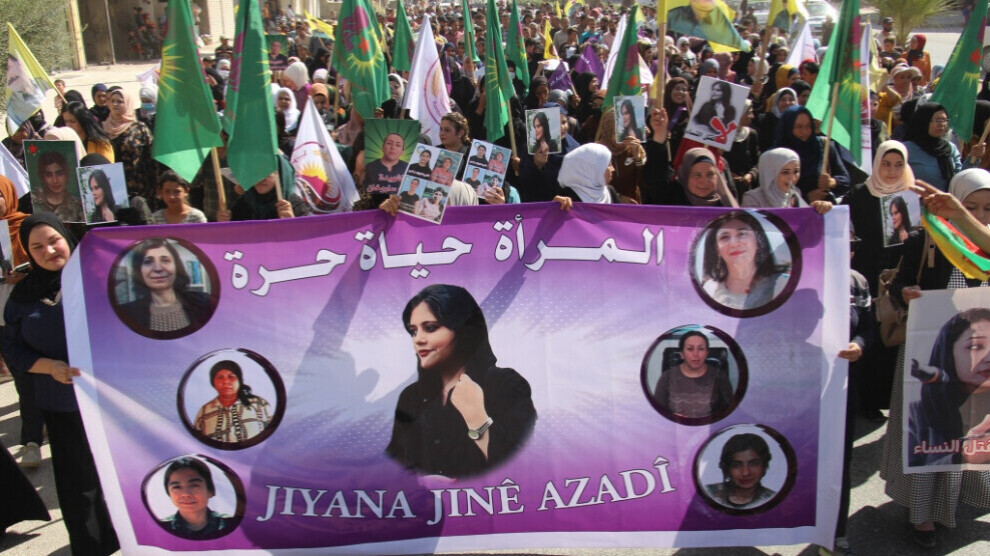
QAMISHLO — The International Day for the Elimination of Violence against Women, which falls on November 25 of the current month, comes to renew the call to confront all forms of violence and discrimination, enhance women's rights and freedom, and ensure their active participation in building society.
The symbolism of this day dates back to 1960, when the three Mirabal sisters were assassinated in the Dominican Republic for their opposition to the regime of Rafael Trujillo, making November 25 a global symbol of the struggle against violence and repression. In 1999, the United Nations adopted this date as the International Day for the Elimination of Violence against Women, by virtue of Resolution 54/134.
Despite international efforts and continuous campaigns, violence against women remains a widespread reality, taking multiple forms, from physical, psychological, sexual, and economic abuse, to threats, deprivation of rights, and digital violence. In the Syrian context, the issue of violence takes on more complex dimensions amid political changes and threats facing women's rights and gains, especially with the continued exclusion of women from decision-making positions and their weak representation in political and administrative institutions.
Hence, the importance of the role of societal institutions, women's organizations, and the family in spreading a culture of equality emerges, alongside the government's responsibility to enact laws that protect women, hold perpetrators of violence accountable, and provide a safe environment that guarantees their access to justice without fear.
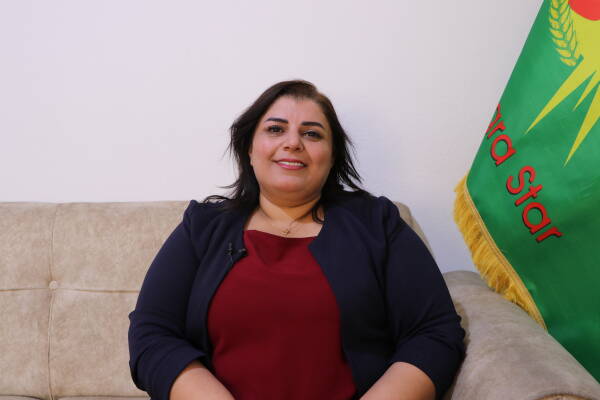
In this context, a member of the Star Congress coordination, Berivan Khaled, stressed that protecting women's gains, guaranteeing their rights, and ensuring their participation in various fields constitute fundamental pillars for building a free and equal society.
From physical assault to political exclusion
Regarding the most widespread forms of violence at the current stage, Berivan Khaled explained that women in Syria face multiple forms of violence, including physical, psychological, and economic violence, alongside the restrictions imposed on them and their exclusion from political and social participation.
She stressed the importance of the International Day for the Elimination of Violence against Women as an occasion to remember the women fighters who gave their lives for freedom, and to renew the pledge to continue the struggle against all forms of violence.
She pointed out that the women of Rojava possess a long history of struggle, during which women played a pioneering and fundamental role in building a revolution that has lasted 14 years. "Through their presence in the political, social, military, and economic fields, women were able to break many barriers and prove their will and strength in order to build a free and equal life."
She noted that these gains, despite their importance, still face serious challenges, with the continuation of practices that target women's role and prevent their full participation in society.
In this context, Berivan Khaled considered that "authoritarian regimes' ignoring of women's role in building society and limiting their opportunities to participate in decision-making represent a direct threat to their rights and to the future of society as a whole." She also warned of the repercussions of the interim government not considering women's participation a fundamental necessity in building the political and administrative system, which makes women's rights and gains vulnerable to danger.
She affirmed that this year comes under more difficult circumstances, as women still lack real representation in many institutions, decision-making mechanisms, and political fields, despite years of events and campaigns that women's movements have been accustomed to organizing on November 25.
She stressed that confronting violence should not be limited to addressing physical assaults. "It must also include removing all obstacles that hinder women's existence, the exercise of their rights and freedoms, and their participation in public life."
Institutions and the family face the responsibility of confronting the culture of violence
Regarding the role of societal institutions and the family in preventing violence against women, Berivan Khaled stressed that the first step begins with recognizing women's role, history, and capabilities in building society, and appreciating their status in practice, far from being content with slogans and speeches.
She pointed out that safeguarding women's rights and ensuring their participation in all areas of life require the combined efforts of societal institutions, women's organizations, educational institutions, and the family, in order to build social awareness based on equality and respect for women's rights.
She also held the government primarily responsible for protecting women by enacting the necessary laws and applying deterrent penalties against perpetrators of violence. "A safe environment must be provided that allows women to report violations without fear or obstacles, while ensuring their legal and social protection."
She explained that ending the cycle of violence is not achieved by punishing perpetrators alone, but requires continuous work in the fields of education and community awareness, alongside changing the mentality that justifies violence or deals with it as acceptable behavior.
Women's organizing is a path to enhancing freedom and confronting violence
Regarding the practical steps that the Star Congress is working to promote on the occasion of November 25, Berivan Khaled explained that the Congress has a history and a struggling legacy in defending women's rights and freedom, dating back to before the launch of the Rojava revolution.
She indicated that protecting women's rights, enhancing their societal role, and developing their capabilities in various fields constitute fundamental axes in the Congress's work, which has not been limited to the intellectual and theoretical aspect, but has translated its vision into practical steps by establishing women's institutions, strengthening women's organizing, and launching various social and economic projects.
Economic independence is a fundamental pillar of women's freedom
In the context of discussing empowerment, she pointed out that the Star Congress has worked to develop projects and economic opportunities aimed at enabling women to achieve economic independence, enhancing their capabilities, and expanding their participation in the decision-making process.
She affirmed that economic independence represents one of the fundamental foundations of women's freedom, in addition to being an important means of enhancing their ability to protect themselves from violence and dependency.
She indicated that "the Congress continues its efforts in spreading awareness of women's rights and consolidating a culture of anti-violence through events, meetings, campaigns, and training programs, based on a vision that considers violence against women a societal issue that cannot be confined to the framework of individual experiences, but rather calls for collective responsibility and comprehensive confrontation."