
Baghdad Seminar Discusses Women’s Role in Peacemaking and Societal Peace
Participants in a Baghdad seminar affirmed that strengthening women’s presence in peace processes in crucial for sustainable stability, with studies showing higher success rates when women participate in negotiations.
RAJAA HAMID RASHID
Iraq — Participants in the seminar agreed that strengthening women's presence in peacemaking processes is a crucial factor in the sustainability of societal stability, affirming that empowering women in decision-making positions reflects positively on reducing conflicts and consolidating civil peace.
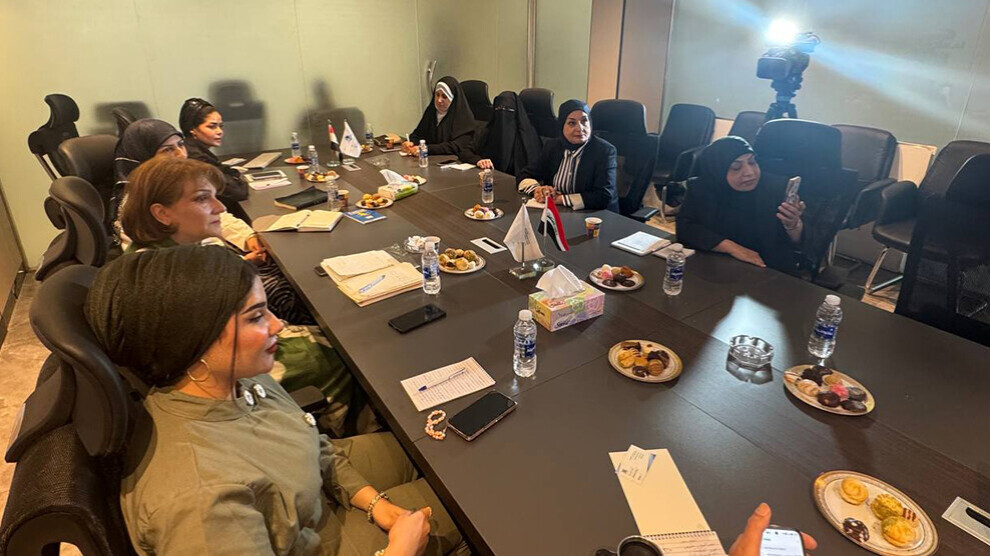
The "Daw" (Light) Center for Development and Democracy Support held a seminar yesterday, Thursday, August 20, titled "The Role of Women in Peacemaking and Societal Peace."
Former parliamentarian Shuruq Al-Abaiji spoke about women's role in peacebuilding, drawing on scientific studies and statistics spanning decades, affirming that indicators related to women's education, political participation, and economic contribution have contributed to the development and stability of societies.
She explained that focusing on women's role does not mean placing responsibility on men for negative aspects, but is based on data and facts related to human development. She noted that the division of labor roles began from the earliest stages of societies' formation, with women associated with agriculture, nature observation, and preserving and nurturing life, while men were initially associated with hunting.
She cited the theory of German sociologist Geert Hofstede, which compared societies based on multiple pillars, including behaviors described as feminine or masculine. She explained that femininity and masculinity in these studies are not related to biological sex or sexual orientation, but to patterns of behavior and thinking.
She explained that feminine behaviors may be practiced by men, and women may practice masculine behaviors, noting that feminine behaviors are associated with consideration for others, human interconnectedness, and peaceful approaches to solutions, while masculine behaviors are associated with the desire for achievement and reaching results.
She added that the study was based on the experiences of several societies, including Scandinavian societies known for their high levels of societal stability and low rates of violence and crime, noting that the high participation of women in decision-making centers has reflected on the nature of societies, prompting some countries to take measures to encourage women's access to leadership positions.
Women's Participation Enhances the Sustainability of Peace Agreements
She referred to an American study covering 154 countries, examining the relationship between women's participation in conflict resolution and the developments witnessed in those societies. She explained that the study's results showed that the higher women's participation in negotiations, mediation, conflict resolution, and monitoring the implementation of agreements, the higher the chances of sustainability of peace agreements. She noted that some agreements can last for decades when women are present in negotiation, monitoring, and conflict resolution processes.
The Rwandan Experience and Women's Role in Ending Conflict
In discussing some international models, Shuruq Al-Abaiji referred to Rwanda's experience in the 1990s, and the civil war and widespread violence between tribes the country witnessed. She added that women in Rwanda took initiatives and stances, including boycotting their husbands if they participated in the war, and pressuring conflicting parties to sit at the negotiating table and seek solutions—not only to stop the conflict but also to prevent its recurrence in the future.
She added that these initiatives contributed to enhancing women's participation in the political process, and reflected on the development of the democratic experience in Rwanda, which became one of the African countries with high rates of women's participation in parliament.
Iraqi Women Were Pioneering in Decision-Making Positions
She noted that Iraqi women were advanced in previous decades and assumed high positions, pointing out that Iraq witnessed the appointment of the first woman to a ministerial position in the Middle East region. She drew attention to the decline in Iraqi women's role in participating in peacekeeping operations, and the failure to provide sufficient opportunities for them to be active partners in issues of security and societal peace.
Shuruq Al-Abaiji concluded her remarks by affirming the necessity of women's presence and participation in various fields, especially as Iraq was among the first countries to ratify UN Security Council Resolution 1325 on women, peace, and security in 2000, emphasizing the importance of their participation in peace negotiations, monitoring, and conflict prevention.
No Legal Restrictions on Women's Political Participation
For her part, criminal law professor Dr. Zaman Hamid affirmed that women's participation in the legislative authority is primarily through the quota system, while their participation in the executive and judicial authorities is a given under constitutional guarantees of their rights. She explained that when reviewing the laws regulating the work of the judicial and executive authorities, there is no legal text preventing women from political participation, assuming leadership positions, or being among decision-makers.
Supporting Women Is Fundamental to Building a Peaceful Generation
Activist Ikhlas Khalid said that women's role represents a foundation in society, affirming that a society that supports women and preserves their rights can raise a peaceful and righteous generation that contributes to building the country. She noted the absence of women's role in negotiations and decision-making, despite their presence within ruling political blocs, pointing to the weak representation of their role in external diplomatic fields and the lack of sufficient opportunities for them to assume positions such as ambassador.
"We Need Laws That Preserve Women's Dignity"
Activist Laheeb Rabih Ali emphasized the need to support and protect women, recounting her personal experience and the problems she faced: "I was subjected to persecution in courts and from society, due to customs and traditions."
She noted that she was beaten during her pregnancy, resulting in the birth of a child with autism spectrum disorder and hyperactivity. She called for the enactment of laws and measures that ensure women's protection, preserve their status and dignity, and provide them with legal and social protection.