
The peace process in Turkey is linked to legal steps that guarantee the rights of the Kurdish people
Lawzer Rozhin Kino affirmen that success of the “Peace and Democratic Society” process requires clear legal and constitutional guarantees, noting the absence of serious steps by the Turkish state so far.
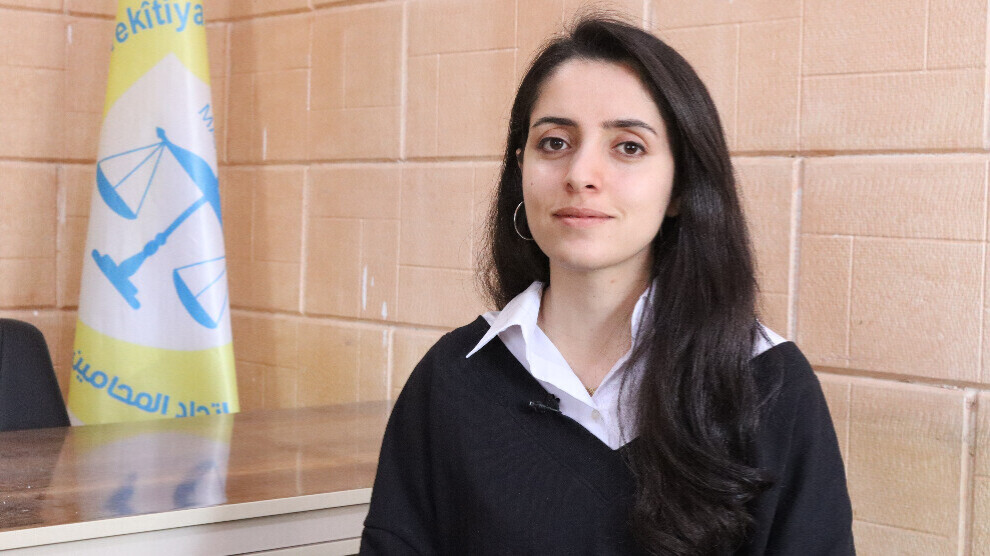
Nourshan Abdi
Kobani — On February 27, 2025, leader Abdullah Öcalan announced a peace initiative titled "Peace and Democratic Society," aiming to resolve the Kurdish issue and begin a new phase transitioning from armed conflict to a political and legal path.
Kurdish parties and organizations have taken steps in this direction at every opportunity, demonstrating the seriousness of their intentions. On the other hand, the Turkish state has still not clearly engaged in the process, even though it faces an important test, as the European Court of Human Rights has given it a deadline until June of this year.
"The process needs legal guarantees"
Lawyer Rozhin Kino said that leader Abdullah Öcalan's initiative has moved the region to a new phase. "With leader Abdullah Öcalan's call on February 27, a new phase began in the region. This call is necessary to address the crises in the Middle East. Peoples are supposed to live together in lasting peace. For that to happen, there is a need for laws and constitutional and legal guarantees, especially in Turkey where the process is taking place."
She added, "In Turkey, the Kurdish people and other components do not enjoy their national and identity rights, nor do they have a clear legal status within the Turkish state. Therefore, when leader Öcalan launched this process, there were steps aimed at ending the phase of armed conflict and moving toward a political and legal solution."
She affirmed that the current phase requires more than ever the adoption of a human rights and legal approach. "We have seen positive positions from human rights figures and institutions. Öcalan also made clear on February 27 of this year that the second phase requires a transition toward democratic and political integration."
"The Turkish state is not clear in its position and intentions"
Regarding the Turkish state's position, she explained, "There are clear steps being taken by Kurdish organizations and parties, but unfortunately, so far we have not seen any notable steps from the Turkish side. This is due to the state's lack of readiness and its inability so far to build trust between itself and society. For example, the state still describes the Kurdish people, the pioneers of this process, as terrorists. Moreover, a large number of political prisoners remain in detention, foremost among them leader Abdullah Öcalan, who has completed 27 years in prison and has the legal right to benefit from the 'right to hope' adopted by the European Court of Human Rights. Yet the Turkish state remains ambiguous in its position toward this process, especially when it comes to Öcalan."
"Legal framework and constitutional guarantees are the path to success"
The lawyer believes, "As long as there is no change in the matter of Abdullah Öcalan's physical freedom, we cannot say that this process is moving toward a clear legal framework. We as human rights advocates emphasize the need for concrete legal guarantees. If this process is to continue, it must be based on a clear legal framework and constitutional guarantees."
She explained, "Several committees have been formed for this purpose, and there are figures who should be directly part of the process. But we see that they are still treated with a mentality of terrorism, which means the Turkish government is not sufficiently prepared. How will those who have laid down their weapons be received in Turkey? Here we need legal mechanisms to ensure their proper integration into society."
She added, "The more seriously the Turkish state approaches this process and accelerates its steps, the more it will protect itself from new crises."
She also referred to the European Court of Human Rights deadline, saying, "The Grand Chamber of the European Court of Human Rights approved this process in September 2025 and set a deadline for the Turkish state until June to show its seriousness. We are approaching this date. If the state does not bring this process into a legal framework, serious problems may arise. Turkey is a signatory to the conventions of this court. If it does not comply, new crises will emerge, and some issues may turn into crimes."
Lawyer Rozhin Kino concluded her legal clarifications regarding the peace and democratic society process by affirming, "We do not want this process to fail or for the peoples of the region to return to war. Therefore, the state's speed in moving forward will save it from many crises."