
Protest concerns drive the Iranian regime to strengthen its auxiliary forces
Amid external pressures and fears of internal protests, reports show a growing presence of proxy forces inside Iran—reflecting a crisis of confidence and an escalation in the state's security character.
Shiwa Elyasi
Kermanshah — During the deadline set by the United States to reach an agreement and force the Islamic Republic to accept its terms, the Iranian authorities have tried to rely on their auxiliary forces to deploy their remaining energy to maintain power. Since the beginning of the war, and with the constant fear of renewed popular protests, the authorities, through pressure and threats, have sought to force their supporters to take to the streets daily in various Iranian cities.
Employees and elements affiliated with the Iranian authorities, under administrative and military threats, have been forced to participate in car convoys or organized marches every night. Human chains have also been formed around power plants and sensitive centers to project an image of "broad popular presence" in an attempt to present a picture of a stable regime, not one facing a legitimacy crisis and the risk of collapse.
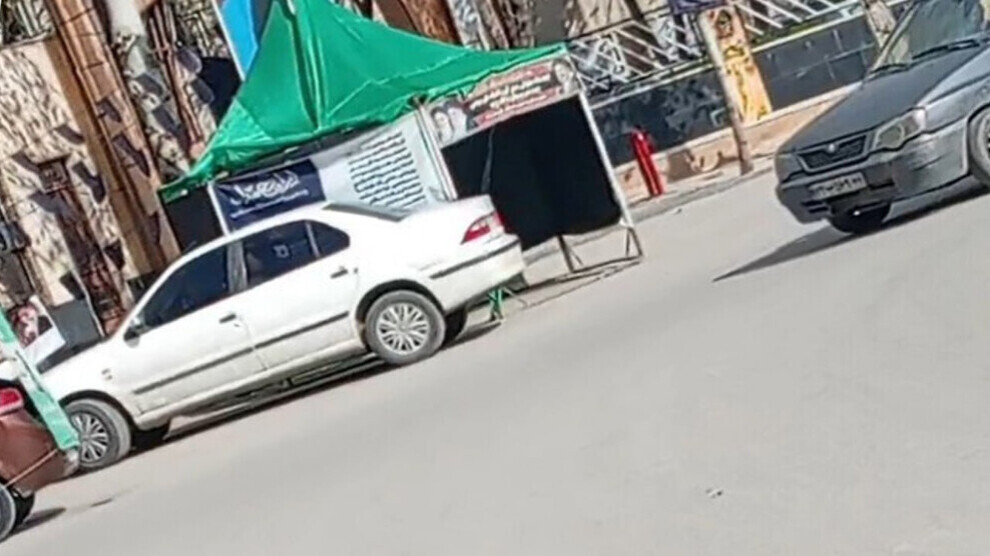
In parallel, the authorities have established mourning processions for the death of their leader in many streets. However, these processions do not serve only a religious function; they are also staffed by elements affiliated with the authorities in civilian clothing under the cover of mourners, effectively turning them into observation points to monitor people's movements and impose a security presence in a different guise.
But relying on internal forces is not the whole story. Reports and eyewitness testimonies indicate that the authorities have also brought in auxiliary forces from outside Iran to increase the number of elements deployed in the streets, including groups such as the "Hashd al-Shaabi" (Popular Mobilization Forces) and other allied factions. According to these accounts, these forces entered through the western borders and spread across several cities.
Some witnesses even reported that a number of these individuals entered with their families, including women and children, and were housed in cities such as Qasr-e Shirin and Kermanshah, which may indicate an intention for long-term settlement rather than just a temporary presence. This suggests that the authorities are trying to integrate these forces into society to strengthen their presence, even if these elements are "imported."
In recent years, especially during periods of popular protests, the deployment of armed forces in the streets was primarily aimed at suppressing protesters. In cities like Kermanshah, many reported that some security elements spoke Arabic, which was considered an indicator of the participation of auxiliary forces in suppression operations.
In the current circumstances, with the increasing likelihood of instability, the authorities appear to anticipate the return of protests and are therefore keen to keep these forces in a state of readiness to intervene. However, not all of these elements are new; some have been inside Iran for years, have received training, and have become part of the security network.
Witnesses also spoke of children between the ages of 10 and 18 being present in camps and military areas, believed to be undergoing early training programs to prepare them as obedient elements for the future. During previous protests, witnesses reported seeing very young elements in the streets who spoke Arabic or other languages.
In the recent war, the presence of these forces was not limited to the streets; they also appeared in government marches carrying flags of factions such as the Iraqi Hashd al-Shaabi. It is also believed that some elements at checkpoints belong to these groups.
Although the presence of auxiliary forces in Iran has been repeatedly documented in recent years by witnesses, it has now moved beyond the stage of "limited presence" and become part of the security structure. This shift carries important implications, including that the regime sees itself in need of cross-border forces to ensure its internal security and maintain its survival, which may reflect a decline in the capabilities of local forces or growing distrust of them.
On the other hand, the regime's resort to using paramilitary forces to control society typically leads to a marked increase in the level of violence against protesters. These forces, which have experience in regional wars, operate according to different standards, not based on laws or internal regulations, but on the logic of battlefields. Since these elements have received training within the security frameworks of the Islamic Republic, they are more prepared to use violence without restraint and place the regime's survival above any human or social consideration. Therefore, their presence may be more dangerous than regular forces, which are at least formally linked to administrative and supervisory structures.
But the most important question is: why has the regime become so dependent on these forces? In recent years, with the rise of popular discontent and the erosion of the internal security and military apparatus structure, this can be interpreted as the regime reaching a point of distrust in its local forces. With the potential decline of legitimacy and the risk of disobedience or hesitation within some units, it seeks to create an alternative, more loyal and reliable force through these auxiliary formations.
These forces are not only ideologically linked to the regime but also depend on it economically and security-wise; their survival is tied to the survival of the regime itself. Therefore, they can be used in times of crisis as a tool to show strength and instill fear in society.
In general, the presence of non-local forces in the streets, especially in cities that have witnessed severe repression, deepens feelings of insecurity, increases loss of trust and social anger, and recalls past experiences of repression, raising the likelihood of a repeat of violence.
Although the role of these forces is currently limited to appearing in government marches, checkpoints, mourning processions, and shows of force, with escalating unrest, they may turn into a primary tool of repression, heralding a new wave of restrictions and pressure on society.