
Kwestan Akram: Self-confidence and competence are the real gateway to women's empowerment
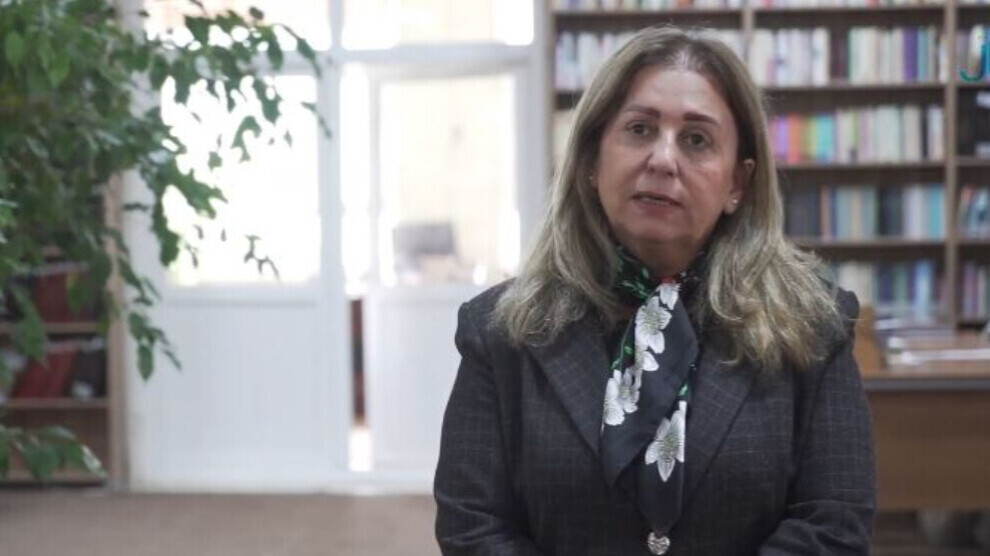
Kwestan Akram, the former mayor of Halabja in the Kurdistan Region, affirmed that leadership is not exclusive to those who work within political parties; a woman can be influential and active even from outside the political framework.
Mehrban Salam
Halabja — Women play a pivotal role in building and developing societies. Despite the challenges they face in reaching decision-making positions, many women have proven their ability to lead and bring about change. In the Kurdistan Region, female models have emerged who have been able to carve their path despite the absence of party or political support.
It is often claimed that women are incapable of political participation to the required degree, and this claim is frequently used as a justification placed upon women themselves, as if they are unable to engage in public work. This discourse reflects a patriarchal view that some political parties seek to entrench, by portraying women as a source of problems or suggesting that a woman's assumption of an administrative position is only acceptable within a specific party framework, and only then is she allowed to assume responsibility.
In this context, Kwestan Akram, the former mayor of Halabja, says that despite the absence of any support, she was able to rely on her experience alone to prove herself in various fields. "For a woman to succeed and reach decision-making positions, she must go through all stages, whether political, organizational, or administrative. When we enter the world of politics, whether we like it or not, all political forces during elections seek to obtain the highest percentage of votes, and administrative positions in government institutions often go to the party that wins the most votes. Therefore, it is necessary for those parties to realize the extent of their belief in women's abilities and competence."
"In Halabja, women have always been at the forefront." She pointed out that the presence of women in advanced positions is always reflected in bringing about clear change within society. "When Halabja became a governorate, women obtained many positions and administrative posts, and between 85% and 90% of them achieved remarkable success."
She added, "Women are more competent than men. This is not a personal opinion, but the result of research and a survey conducted across the Region, where people were asked who is more successful administratively: women or men? The answer was clearly in favor of women. They also have a strong presence in organizational work and other fields, and they have proven their ability and competence in various positions."
"Women must trust their abilities." Kwestan Akram, who continues to work in multiple administrative fields to this day, explained that a woman who aspires to leadership needs a set of essential qualities, such as competence, diligence, and self-development. She stressed that a woman must have a strong personality, possess leadership skills, and deserve the trust of those who choose her, while maintaining simplicity and clarity. "For a woman to reach a high position or a high job rank, she must believe in herself, trust her abilities, be an expert in her field, and be capable of being a leader in any field she works in."
"Women are capable of leadership even outside the framework of politics and parties." Kwestan Akram noted that many competent people cannot advance unless they receive party support. The absence of such support often prevents reaching decision-making positions, because parties seeking to govern tend to present their own cadres first. However, she affirms that there are those who have the ability to work completely independently. She explained that many women who were previously within political parties now work independently in the civil field, making tangible efforts on women's and environmental issues. They have proven their presence and success in those fields and have even become capable of assuming leadership.
The former mayor of Halabja, Kwestan Akram, concluded her speech by affirming that success does not necessarily require belonging to a party; rather, it depends above all on the strength of personal abilities, self-confidence, and the ability to prove competence. She confirmed that there are models of successful women who do not belong to any political entity, yet they have been able to achieve an influential and leadership presence.