
Amina Ahmed:Region’s Women face tradition and war pressures
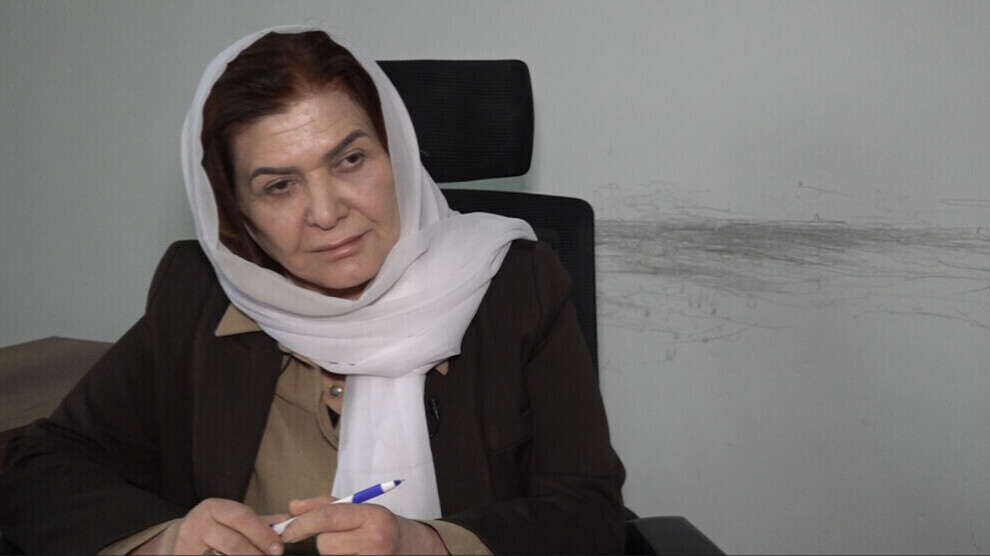
Activist Amina Ahmed says Middle East transformations demand greater awareness and organization for Kurdish women, urging unity and readiness across all parts of Kurdistan.
Haivy Salah
Sulaymaniyah — The Middle East is witnessing major historical transformations, and the conflicts between axes have reached their peak. Amidst this, women are emerging as a dynamic and influential force. They not only bear the burdens of displacement and destruction but also confront intellectually and politically imposed systems.
The experiences of recent years in Rojava and other parts of Kurdistan and neighboring countries have proven that no political project can succeed without the active participation of women. Today, as the region approaches a new map, the role of women in the Kurdistan Region and other parts is moving toward a kind of self-organization that no longer accepts being viewed as marginal numbers.
"We must not engage as Kurds in conflicts between states"
Activist Amina Ahmed from the Kurdistan Region said: "This ongoing war has been affecting all parties and the entire world. This war is not only between Israel and Iran; it is a third world war. But amidst this, the Kurds have chosen neutrality because we have always been at the heart of wars and have constantly paid their price. We know well what we have experienced from the Anfal campaigns and chemical bombardment, and we have always been subjected to military and political attacks by the occupying states surrounding us."
She affirms that what is happening now in the Middle East has a direct impact on citizens, explaining: "These wars are aerial and electronic and have not yet reached the level of ground war, but indicators suggest they may develop into ground war. In that case, the Kurds will be the most affected. Therefore, the Kurds must remain neutral in this war because we cannot engage in a conflict between states."
"Different parts of Kurdistan are constantly being targeted"
She added: "We in the Kurdistan Region have not been able to rely on local production. Most of our products are imported, and this directly affects citizens' economy. The crisis has already begun; commodity prices in the markets have risen, and the government has not taken any significant steps. Moreover, the educational process has almost completely stopped. The effects of this may not appear on children now, but the negative impacts of disrupted education will appear in Kurdish society over the next ten years."
She believes that the continuation of attacks has caused political, social, and military problems. "The enemies of the Kurds are constantly targeting different parts of Kurdistan with drones. Although the Kurds have not entered the war and have maintained neutrality, the social impact has been great. This war moved from the war between Ukraine and Russia, which had a wide impact in Europe, and then moved again to the Middle East."
"Kurdish women are an invincible force and have always been present in revolutions"
Amina Ahmed said that women have always been in a state of continuous resistance in social and political aspects. "Kurdish women are an invincible force, and they have always been present in revolutions. They have a clear role and influence, as history testifies. Today, good preparations must also be made for Kurdish women so that they can be a very influential force in facing occupying states and enemies."
She affirmed that the women of Eastern Kurdistan, from the past until now, have been in a state of struggle and readiness. Since the 1980s, they have been confronting enemies and working to establish an independent state. Today, "Eastern Kurdistan should strengthen its readiness better to attain its national rights, because the occupying states and enemies of the Kurds are constantly seeking to violate these rights, and this should not be accepted."
She pointed out that what supports all parts of Kurdistan today is the "street revolution." Therefore, this revolution must be supported in order to "confront the enemies." Any change happening now in Eastern Kurdistan and Iran must involve the Kurds. "They can benefit from the experiences of the Kurdistan Region and work better to attain their political and national rights."
Amina Ahmed also affirmed that preparations must be made well in all respects, because rights are seized, not granted. The Kurds have long sought to obtain their national rights, but "regional and international enemies have always been an obstacle to achieving these rights." She reminded that "in 1991 and also in 2003, when the Kurds were at the peak of readiness, there was an opportunity to make Kurdistan a larger entity or to achieve national rights, but that was obstructed."
"The Kurds must unite"
Regarding North Kurdistan, she explains that "the Turkish state's fear of Mr. Ocalan and other Kurdish leaders negatively affects the resolution of issues and the path of the peace process. When the Kurds raised the banner of peace before Turkey and the world, the Turkish government should have dealt seriously. The Kurds have long sought peace and want to protect Kurdish regions from any attempts at occupation."
At the conclusion of her speech, activist Amina Ahmed stressed the necessity of Kurdish unity in all parts of Kurdistan to attain their rights, affirming that "unless the Kurdish issue is resolved, the problems of the Middle East will not be resolved. The Kurds and their leaders have made notable efforts on the political level and have sought to address their issues in cooperation with regional countries. However, they do not want and will not accept returning again to subjugation under Persian, Arab, or Turkish control, and they reject any attempts to manipulate their sentiments in the Middle East."