
'Inclusion of the Kurdish language in the Syrian constitution guarantees the protection of Kurdish identity'
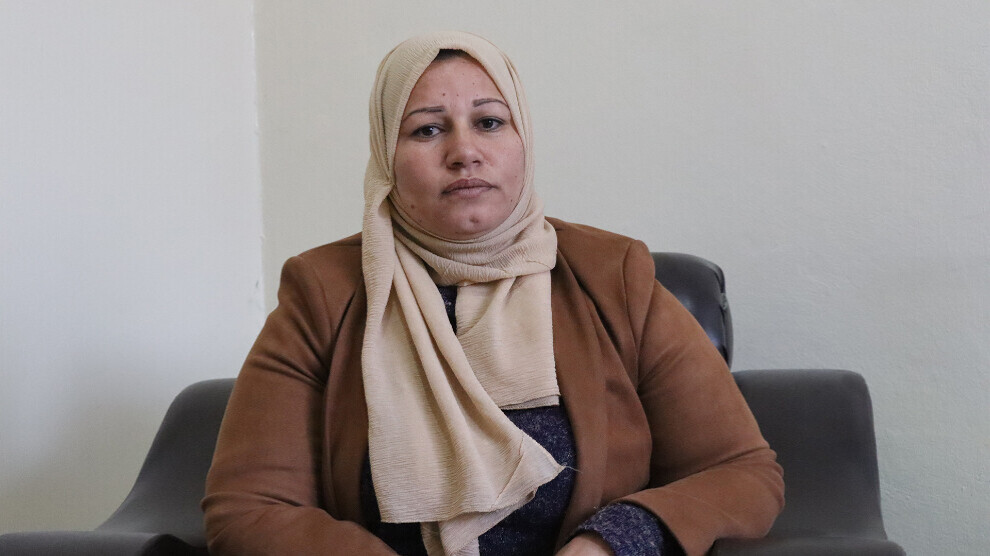
Aziza Ismail, Kobani schools administrator, affirmed Kurds demand inclusion of their cultural rights in Syria's new draft constitution, stressing protection of Kurdish-language education achievements in schools and universities within a legal framework
Nurhan Abdi
Kobani — Syria and the Rojava regions are going through a sensitive phase, especially after the integration process between the Autonomous Administration and the interim government began. Through this process, the Kurdish people in Syria are supposed to obtain their rights in all fields, most importantly the field of education and preserving their mother tongue legally and as a right within the new Syrian constitution.
"Despite oppression, we have preserved our language, identity, and culture"
Aziza Ismail, an administrator in the Kobani schools administration, says that talking about the oppression the Kurds suffered in Syria during the rule of the former regime begins with preventing them from speaking their mother tongue even before preventing education in it, explaining that Kurdish students were strictly forbidden from using their language inside classrooms, let alone learning it formally.
She adds that the Kurdish language was completely banned in schools and institutions, as Arabic was imposed as the sole basic language on all Syrian components, within the framework of a repressive policy aimed at erasing the linguistic and cultural identity of the Kurds.
She explains that Kurdish students faced great difficulties in the stages of education during the rule of the former regime, as the student spoke his mother tongue at home, but in school he encountered a different language and an environment far from his identity and culture. This contradiction made the primary stage difficult and unsuccessful for many students, because the focus was on learning Arabic as an imposed basic language.
She points out that the Kurdish people suffered for a long time in learning their mother tongue or even speaking it, as Kurdish was taught secretly by people attached to their identity, and these people were subjected to arrest and physical violations in the regime's prisons because of that.
"The Rojava revolution strengthened the Kurdish language"
Aziza Ismail noted that the Rojava revolution achieved great gains in the field of education and the Kurdish language, as it was based on demanding the rights of all components. One of the most prominent demands of the Kurdish people was the recognition of the right to speak and learn in their mother tongue, affirming that one of the most important achievements of the July 19 Revolution was enabling new generations to study in Kurdish.
She highlights the development witnessed by the Kurdish language during the years of the revolution, explaining that since 2015, formal education in Kurdish began in all schools of Rojava, including Kobani, from primary to secondary level. Over time, an entire generation was raised educated in its mother tongue, and institutes and universities teaching in Kurdish were established, including the Kurdish Literature branch from which she graduated and was among its teachers.
She added, "From the beginning of the revolution until today, our revolution and our gains have faced many threats, attacks, and violations, but despite all this, we have preserved our language, our identity, and our existence. We will continue to preserve the gains of our revolution and will not give up learning in our mother tongue, Kurdish, because it is a fundamental right for us, and our students have the right to be educated and speak in their language."
"In the integration phase, we demand our rights within the constitution"
Regarding the integration phase and the fate of the educational field and the Kurdish language in Syria, she says, "In this phase, and within the developments the region is witnessing in the integration process, there are many dialogues and discussions about the educational field to preserve the Kurdish language in our areas."
She spoke about the legal and rights aspect within the Syrian constitution and the demands of the Kurdish people: "The Kurdish component in Syria is considered the second largest component after the Arab component. Therefore, the Kurdish language should be the second language alongside Arabic, and it should be documented and supported within the Syrian constitution in order to preserve the rights and privacy of the Kurdish component in Syria."
At the conclusion of her speech, Aziza Ismail, an administrator in the Kobani schools administration, stressed the necessity of enshrining the linguistic rights of Kurds in the Syrian constitution, affirming that the constitution is the sole guarantor of protecting identity across generations. "Official recognition of the Kurdish language within the constitution will dispel fears of the erasure of Kurdish culture and identity. Their demand is to establish these rights legally and as a right that guarantees the status of the Kurdish component in Syria."